Most travellers arrive in Tanzania thinking about lions, elephants and leopards. By day three, many are leaning out of the vehicle shouting “what’s that bird?” It happens almost every time. Birdwatching in Tanzania is some of the best in Africa, with more than 1,100 species recorded across the country, from flamingos turning lakes pink to eagles big enough to take a small antelope. You don’t need to be a serious birder to enjoy it. A pair of binoculars, a curious guide and a bit of patience are enough. This guide covers the best parks, seasons and species, plus some of the smaller animals that make a safari so much richer than a Big Five checklist.
Here’s the honest truth from our guides in Arusha: the travellers who look beyond the Big Five tend to have the best trips. There’s simply always something to watch.
Why Tanzania Is Brilliant for Birds
Tanzania packs a huge variety of habitats into one country, and each one attracts different birds.
- Open grasslands in the Serengeti are home to ostriches, secretary birds and bustards.
- Alkaline lakes such as Manyara and the crater lake in Ngorongoro draw flamingos and waders.
- Acacia woodland in Tarangire suits hornbills, barbets and lovebirds.
- Mountain forests on Kilimanjaro and in the Usambaras hold rare and endemic species.
- Coastal mangroves around Zanzibar attract kingfishers, herons and migrating shorebirds.
On top of that, hundreds of migrant species fly in from Europe and Asia between November and April. Some of the swallows you see in Tanzania may have spent the summer nesting in a British barn.
Best Parks for Birdwatching
Lake Manyara National Park
Small but packed with life, Lake Manyara has around 400 recorded species. Flamingos gather on the lake in large numbers in the wetter months, along with pelicans, storks and hammerkops. The groundwater forest near the entrance is great for trumpeter hornbills and silvery-cheeked hornbills.
Tarangire National Park
Tarangire is a favourite with birders for good reason. More than 500 species have been recorded here, including the yellow-collared lovebird and ashy starling, both found only in Tanzania. Kori bustards, among the heaviest flying birds in the world, strut through the grass.
Serengeti National Park
The Serengeti is best known for big cats, but its birdlife is impressive too. Look for secretary birds stamping on snakes, lappet-faced vultures at kills, and the beautiful grey-crowned crane. The Fischer’s lovebird is another Tanzanian endemic you can spot here.
Ngorongoro Crater
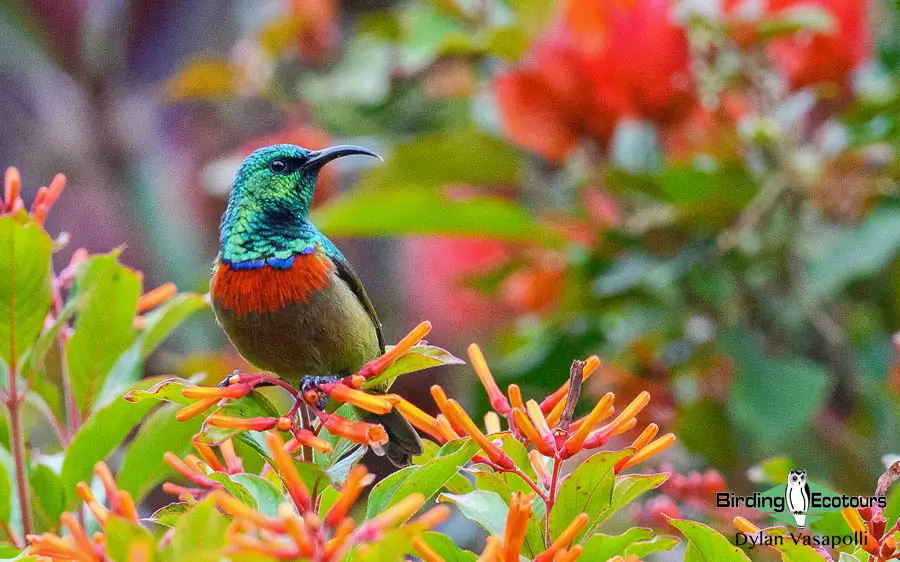
The crater floor of Ngorongoro offers flamingos on Lake Magadi, ostriches on the plains and plenty of raptors overhead. The forested rim is good for sunbirds and turacos.
Birdwatching Parks Compared
| Park | Recorded Species (approx.) | Signature Birds | Best Habitat |
|---|---|---|---|
| Tarangire | 500+ | Yellow-collared lovebird, ashy starling, kori bustard | Acacia woodland and swamps |
| Serengeti | 500+ | Secretary bird, Fischer’s lovebird, grey-crowned crane | Open grassland |
| Ngorongoro | 500+ | Flamingos, ostrich, sunbirds | Crater lake, plains and forest rim |
| Lake Manyara | 400 | Flamingos, pelicans, silvery-cheeked hornbill | Lake shore and groundwater forest |
| Mikumi | 400+ | Lilac-breasted roller, bateleur eagle | Open floodplain and woodland |
Birds Even Beginners Will Love
You don’t need a field guide to enjoy these. They’re bold, colourful and easy to spot:
- Lilac-breasted roller: possibly the most photographed bird in East Africa, with eight or so colours on one bird.
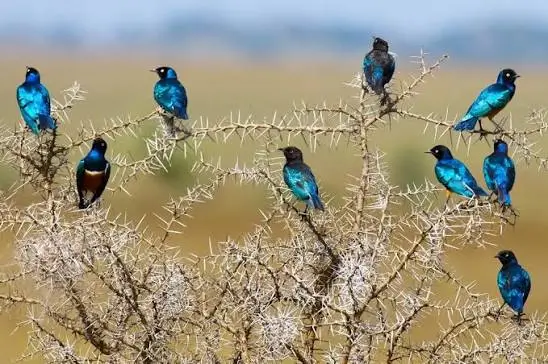
- Superb starling: shimmering blue and orange, and often hanging around lodges and picnic sites.
- Grey-crowned crane: elegant, with a golden crown of feathers.
- Secretary bird: long legs, a crest of quills and a habit of stamping snakes to death.
- Ostrich: the world’s largest bird, and surprisingly fast.
- Southern ground hornbill: large, black and red-faced, with a deep booming call.
- Fish eagle: its haunting cry is often called the sound of Africa.
When to Go Birdwatching
- November to April: the best time for birders. Migrant species arrive from Europe and Asia, resident birds are in breeding colours and many are nesting.
- April and May: the long rains bring lush scenery and very few visitors. Some roads get muddy, but the birding is excellent.
- June to October: the dry season is better for big game, but birds still gather around water and are easy to spot in the thinner vegetation.
January to March also brings the calving season in the southern Serengeti, so you can combine excellent birding with predator action. The Great Migration experience page shows where the herds are each month.
Wildlife Beyond the Big Five
Birds aren’t the only reward for looking a little closer. Tanzania’s smaller animals are full of character:
- Dwarf mongooses: peeking out from termite mounds in Tarangire.
- Rock hyraxes: small, furry and, surprisingly, related to elephants.
- Bat-eared foxes: enormous ears and a diet mostly of termites.
- Dik-diks: tiny antelopes that pair for life and often stand in twos.
- Vervet monkeys and olive baboons: endlessly entertaining (keep your snacks hidden).
- Serval cats: spotted, long-legged and easier to see in the Ngorongoro Crater than almost anywhere else.
- Hippos and crocodiles: at rivers and pools, especially in the Serengeti.
Birding Beyond the Northern Circuit
If birds are high on your list, it’s worth looking past the famous parks. A few extra stops can add dozens of new species to your list.
- Arusha National Park: close to town and often overlooked. Its forests, lakes and Mount Meru slopes hold turacos, trogons and flocks of lesser flamingos on the Momella Lakes.
- Kilimanjaro’s lower forests: if you’re climbing Kilimanjaro, keep binoculars handy on the first day. The rainforest zone is rich in sunbirds, turacos and the striking silvery-cheeked hornbill.
- Lake Eyasi: a soda lake south of Ngorongoro, good for flamingos, pelicans and waders, and an easy pairing with a cultural visit.
- Zanzibar: mangroves, coral rag forest and beaches attract crab plovers, kingfishers and migrant waders. Jozani Forest is also home to the rare red colobus monkey. A Zanzibar beach stay makes a relaxing end to a birding trip.
- The Usambara Mountains: part of the Eastern Arc range, known among serious birders for rare forest species found almost nowhere else.
Adding even one of these to a standard safari can turn a good birding trip into a brilliant one. Ask us how to fit them into your route.
What to Bring for Birdwatching
- Binoculars: the single most important item. An 8×42 or 10×42 pair is ideal.
- A field guide or app: a book on East African birds or a bird ID app helps you put names to what you see. Download offline content, as signal is patchy.
- A camera with a long lens: 400mm or more if you want sharp shots of small birds.
- A notebook: many travellers love keeping a list. It’s not unusual to tick off 100 or more species on a week-long trip.
- Neutral clothing: khaki and olive help you blend in.
Keen on photography too? A photographic safari gives you more time at each sighting, which suits birders perfectly.
Tips for Better Birdwatching on Safari
- Tell your guide early. Let them know on day one that you’re interested in birds. Many of our guides are keen birders themselves and will stop for that kingfisher others might drive past.
- Go out at dawn. Birds are most active and vocal in the first hours of light.
- Listen as well as look. Many birds are heard before they’re seen.
- Watch the water. Rivers, swamps and lakes are birding hotspots in every season.
- Explore the camp grounds. Lodges and camps often have weavers, sunbirds and starlings right outside your room.
- Consider a private vehicle. You can stop as long as you like without worrying about other guests. Our luxury and exclusive safaris include private vehicles.
To learn more about bird conservation across Africa, BirdLife International is a great resource. For more on parks and seasons, see our guide to safari tours in Tanzania.
Frequently Asked Questions
How many bird species are there in Tanzania?
More than 1,100 species have been recorded in Tanzania, including several found nowhere else in the world.
Which park is best for birdwatching in Tanzania?
Tarangire and Lake Manyara are top choices on the northern circuit, and both are close to Arusha. Combining them with the Serengeti and Ngorongoro gives the widest variety.
Can I combine birdwatching with a normal safari?
Absolutely. Most birding happens on regular game drives. Just let your guide know you’re interested, and they’ll point out birds along the way. Our 2-day Tarangire and Lake Manyara safari is a great short option.
See More Than the Big Five
Kilimora Adventure is based in Usa River, Arusha, and runs safaris from 2 to 11 days across Tanzania’s best parks. Tell us you love birds, and we’ll match you with a guide who does too and plan a route through the best habitats.
+255 796 440 555 · +255 762 008 009 · info@kilimoratz.com
Leave a Reply