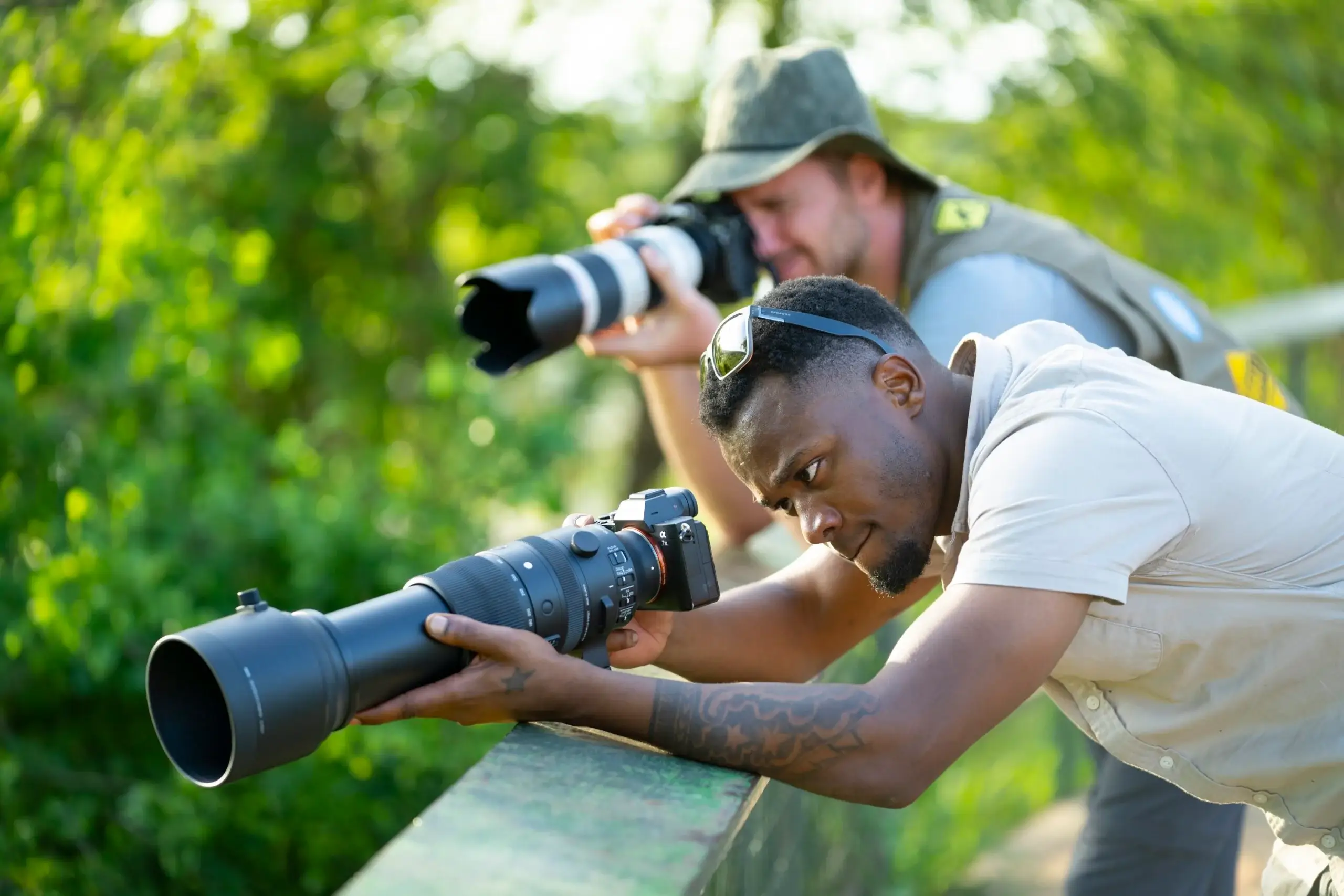
Almost everyone comes home from a safari with a few hundred photos of animals that are slightly too far away, slightly blurred or half hidden behind a bush. Good Tanzania Safari Photography isn’t about owning the most expensive lens. It comes down to a handful of habits: knowing when the light is good, keeping your camera steady in a vehicle, and being ready before the action starts. This guide covers those habits, based on what our guides in Arusha see photographers get right (and wrong) every season.
You don’t need to be a professional. Whether you’re shooting on a full-frame camera or a decent phone, the tips below will make a real difference to what you bring home.
Choosing the Right Gear Without Overpacking
Light aircraft and safari vehicles don’t leave much room, so pick your kit carefully. Most of your shots will be taken from the vehicle, at distances of 20 to 200 metres.
Cameras and Lenses
- A telephoto zoom. Something in the 100 to 400mm range (or 150 to 600mm if you’re serious about birds) will cover most wildlife situations.
- A wide-angle lens or second body. A 24 to 70mm lens is perfect for landscapes, big skies and animals that wander right up to the vehicle. Switching lenses in the dust is risky, so a second body or a good phone saves a lot of trouble.
- A modern smartphone. Phones with 3x or 5x optical zoom take lovely landscape and close-range shots. They struggle with distant animals, so use them for scenery and camp life.
Accessories That Earn Their Place
- A beanbag to rest your lens on the window frame or roof. It’s far more useful than a tripod in a vehicle
- Spare batteries (at least two) and plenty of memory cards
- A blower brush and microfibre cloths for dust
- A rain cover or simple plastic sleeve for green season showers
- A power bank and a laptop or portable drive to back up each evening
Camera Settings That Work for Wildlife
Animals move, vehicles vibrate and light changes fast. Set your camera up before the drive, so you aren’t scrolling through menus while a cheetah sprints past.
- Shutter speed first. Use at least 1/1000s for moving animals and 1/2000s or faster for birds in flight or a hunt. For resting animals, 1/250s is usually fine.
- Auto ISO is your friend. Set your shutter speed and aperture in manual mode and let ISO float. Modern cameras handle ISO 3200 well, and a sharp, slightly grainy photo beats a blurred clean one every time.
- Continuous autofocus. Use AF-C (or AI Servo) with animal-eye detection if your camera has it.
- Burst mode on. When a lion yawns or an eagle takes off, fire a short burst and pick the best frame later.
- Shoot RAW. The bright savannah sun creates harsh contrast, and RAW files give you far more room to recover shadows and highlights.
Working With Safari Light
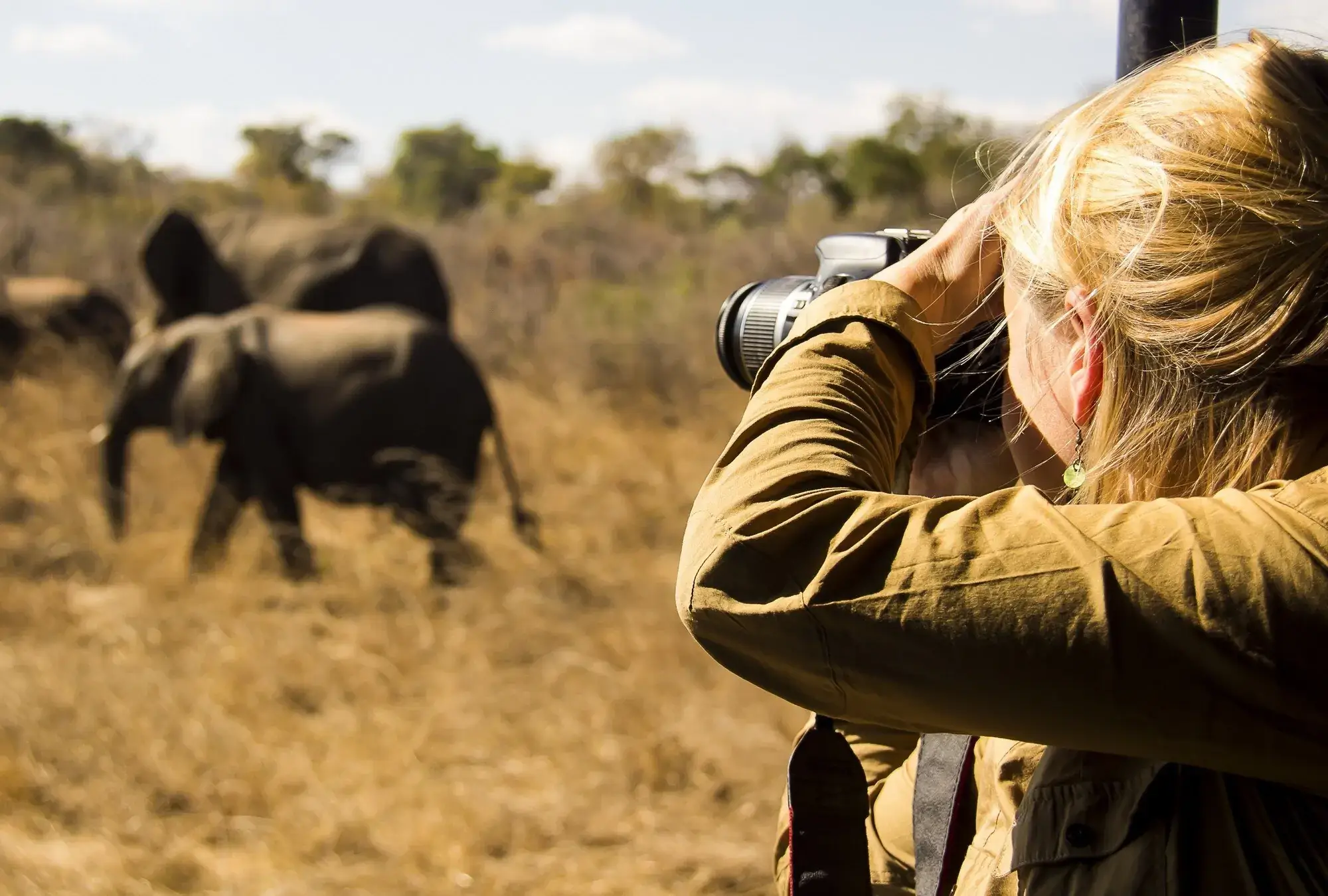
Light matters more than gear. Near the equator the sun rises and sets quickly, so the soft golden light only lasts about an hour at each end of the day. That’s why game drives start at dawn.
- Early morning (6am to 8:30am): warm, low light, and predators are often still active after the night.
- Midday: flat and harsh. Use it for close portraits in shade, black-and-white shots or simply resting.
- Late afternoon (4:30pm to sunset): the best light of the day, with long shadows and rich colour on the grass.
- Backlight: shooting towards a low sun gives glowing rim light on manes and dust. Expose for the highlights and let the rest go dark.
Composition: Making Photos People Actually Remember
A sharp photo of a zebra is nice. A sharp photo of a zebra telling a story is the one you’ll print.
- Get to eye level. Ask your guide to position the vehicle lower or at a better angle. Shooting slightly from below makes animals look powerful.
- Focus on the eyes. If the eyes are sharp, the photo usually works.
- Leave room to move. Give animals space in the direction they’re looking or walking.
- Show behaviour. Grooming, playing, drinking and feeding make better pictures than an animal simply standing there.
- Go wide sometimes. An elephant small in the frame beneath a giant baobab in Tarangire says more about the place than a tight portrait.
Where to Shoot: Best Parks for Photography
Each park gives you something different to work with. Here’s how they compare from a photographer’s point of view:
| Park | Best Subjects | Best Time to Visit | Photography Tip |
|---|---|---|---|
| Serengeti | Big cats, Great Migration, open plains | Year-round; July to October for crossings | Bring your longest lens for river crossings |
| Ngorongoro Crater | Black rhino, lion, crater landscapes | Year-round | Arrive early before mist lifts for moody scenes |
| Tarangire | Elephant herds, baobab trees | June to October | Use a wide lens to include baobabs in the frame |
| Lake Manyara | Flamingos, birdlife, tree-climbing lions | November to June for flamingos | Fast shutter speeds for birds in flight |
| Mount Kilimanjaro | Mountain landscapes, sunrise views | January to March, June to October | Shoot at dawn, when clouds are lowest |
If you’re timing your trip around the herds, our Great Migration experience page explains what to expect in each month.
Photographing Landscapes and Night Skies
It’s easy to spend the whole trip zoomed in on animals and forget how beautiful the country itself is. Make time for the bigger picture.
- Use foreground interest. A lone acacia, a termite mound or a winding track gives a wide plain depth.
- Watch the sky. Green season storms produce dramatic clouds and rainbows that the dry season simply can’t match.
- Try the night sky. Away from towns, the Milky Way is clearly visible. Use a wide lens, the widest aperture you have, ISO 3200 and an exposure of about 15 to 20 seconds. You’ll need something solid to rest the camera on, so ask your camp whether there’s a safe spot to shoot.
- Silhouettes at sunset. Giraffes and acacias against an orange sky are a classic for good reason.
Ethics and Etiquette Behind the Lens
The best wildlife photos never come at the animal’s expense. A few ground rules keep everyone safe:
- Stay in the vehicle unless your guide says otherwise. Animals see the vehicle as one object, not as people
- Keep your voice low and never call out or bang the vehicle to get an animal’s attention
- Don’t use flash on wildlife, especially at night
- Always ask before photographing people, including Maasai communities. Some will ask for a small fee, which is fair
- Respect park rules on off-road driving. Our guides won’t break them for a photo, and you shouldn’t ask them to
Park regulations can change, so it’s worth checking the latest rules on the Tanzania National Parks website before you travel.
Why Your Guide Is Your Most Important Piece of Kit
Honestly, a good guide matters more than a good lens. Our guides read animal behaviour, know where the light will fall and can position the vehicle so the sun is behind you. Tell them on day one that photography is a priority. They’ll wait longer at sightings and think about angles as well as animals. They also know the small things, like which side of the crater road catches morning sun, or where a leopard was seen resting yesterday afternoon.
For serious photographers, a private vehicle makes a huge difference. You get your own window, more space for gear and full control over how long you stay. Our luxury and exclusive safaris include private vehicles as standard. Not sure what to bring? Our guide to safari tours in Tanzania covers the parks, seasons and tour formats in more detail.
Frequently Asked Questions
What is the best lens for a Tanzania safari?
A 100 to 400mm zoom is the best all-rounder. Pair it with a wide-angle lens or a good phone for landscapes and close encounters.
Can I take good safari photos with just a phone?
Yes, for landscapes, camp life and animals close to the vehicle. For distant wildlife, a camera with a telephoto lens will give much better results.
Which month is best for safari photography in Tanzania?
The dry season (June to October) gives clear views and concentrated wildlife. January to March is brilliant for calving season and green landscapes with dramatic skies.
Ready to Fill Your Memory Cards?
Kilimora Adventure is based in Usa River, Arusha, and runs safaris from 2 to 11 days across Tanzania’s best parks, including Big Five safaris and photography-focused trips. Tell us your dates and what you’d love to photograph, and we’ll plan a route around the best light and sightings.
+255 796 440 555 · +255 762 008 009 · info@kilimoratz.com
Leave a Reply