Most people spend more time choosing a phone than planning one of the most significant trips of their lives. This guide fixes that — park by park, tour by tour, with no filler.
10 min read · UK English · Kilimora Adventure, Arusha
Here is what most people do when they decide to go on safari tours in Tanzania: they type something into Google, land on three identical round-up articles, pick a famous park name they recognise, and then spend three months being confused by itinerary options that all look roughly the same. The result is usually a good trip — Tanzania is forgiving like that. But it is rarely the trip they could have had with a bit more information upfront.
Tanzania has six major safari destinations, at least five distinct tour formats, and a wildlife calendar that means the timing of your visit changes what you see quite dramatically. None of that is complicated once you understand it. This guide covers what you actually need to know before you book — and points you towards the right safari tour for your specific situation.
Quick note on Kilimora Adventure: This guide is written by the Kilimora team, based in Usariver, Arusha. We run tours ourselves — 2-day short breaks through to 11-day Tanzania and Zanzibar combinations. Everything in this guide comes from direct experience in these parks, not from reading other people’s trip reports.
The Six Parks: What Each One Actually Offers
Tanzania’s safari destinations are not interchangeable. Spending all your time in the Serengeti when you could have added two nights in the Ngorongoro Crater is a missed opportunity. Here is how the main parks compare on what matters most:
| Park | Best For | Best Season | Crowds | Kilimora Tours |
|---|---|---|---|---|
| Serengeti | Big cats, Great Migration | Year-round; July–Oct for crossings | Moderate–High | ✔ All durations |
| Ngorongoro Crater | Big Five in one day, black rhino | Year-round | Moderate | ✔ From 3-day |
| Tarangire | Elephant herds, baobab scenery | June–October (dry season) | Low | ✔ From 2-day |
| Lake Manyara | Tree-climbing lions, flamingos | Nov–Jun for flamingos | Low | ✔ From 2-day |
| Mikumi | Accessible from Dar es Salaam | June–October | Very Low | ✔ Available |
| Mount Kilimanjaro | Trekking, summit challenge | Jan–Mar and Jun–Oct | Moderate | ✔ 8-day routes |
The strongest itineraries combine two or three parks. A 4-day trip to Tarangire and Lake Manyara is a solid introduction. A 6-day circuit covering the Serengeti, Ngorongoro, and Tarangire gives you the full picture. If you want to see the Great Migration river crossings specifically, you need to be in the northern Serengeti between July and October — and that shapes everything else about your dates.
The Great Migration: A Month-by-Month Guide
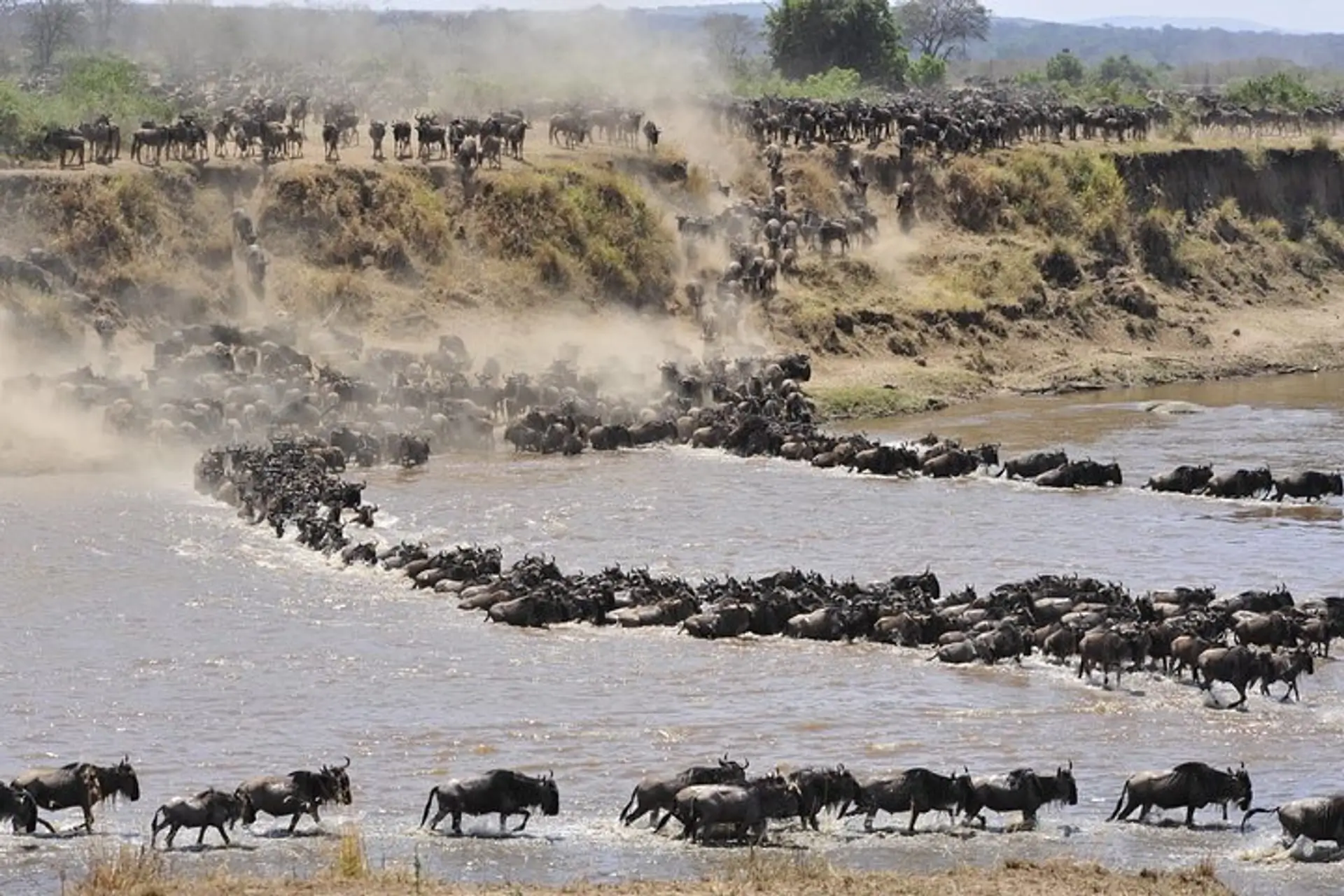
The Great Migration is not a single event — it is a continuous year-round movement of around 1.5 million wildebeest, 200,000 zebra, and hundreds of thousands of gazelle across the Serengeti-Mara ecosystem. The drama peaks at different points throughout the year. Knowing which phase you want to see determines when you should travel.
Jan – Mar
Calving Season — Ndutu, Southern Serengeti
Up to 8,000 wildebeest calves born daily. Predator concentration is intense — cheetah, lion, and hyena follow the herds. This is one of the most dramatic but least-visited phases.
Apr – May
Long Rains — Central Serengeti
Green season. Fewer visitors, lower prices, lush scenery. The herds are moving north but the Grumeti crossings haven’t begun. Good for birdwatching and photography.
Jun – Jul
Grumeti River Crossings — Western Serengeti
The herds cross the Grumeti River heading north. Fewer visitors witness this phase compared to the Mara crossings. An underrated time to visit.
Jul – Oct
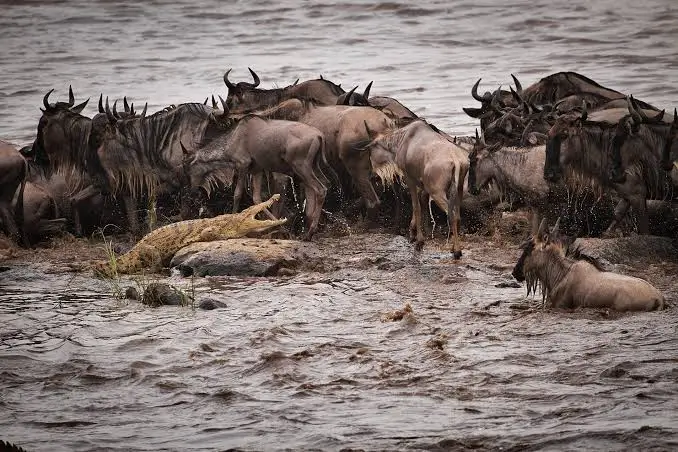
Mara River Crossings — Northern Serengeti ⭐ Peak Season
The famous river crossings. Crocodiles in the water, predators on the banks, wildebeest leaping in their thousands. This is the phase most people are searching for — and it books up months in advance.
Nov – Dec
Return South — Central and Southern Serengeti
The herds move south again towards the calving grounds. Short rains begin. A quieter time, with good game viewing and lower rates on accommodation.
For 2026, Kilimora Adventure has built itineraries around each migration phase — from the calving grounds at Ndutu through to the Mara River crossings in the northern Serengeti. If the Migration is your main reason for visiting, the Great Migration experience page covers the specific options in detail.
Safari Tour Formats: Which One Is Right for You?
Not every safari looks the same, and the differences go beyond price. Here are the main formats Kilimora runs, with an honest description of who each one actually suits:
- 2–4 Days: Wildlife Safaris
Standard game drives across one or two parks. Best for first-timers or travellers with limited time. Covers the key sightings without overcommitting. View tours → - 5–7 Days: Classic Circuit
Three parks, mixed accommodation, properly paced. The format most experienced Tanzania travellers recommend for a first visit. View tours → - 6–10 Days: Luxury & Exclusive
Private vehicles, premium lodges, flexible daily scheduling. For travellers who want the experience without any compromises. View tours → - 4–6 Days: Budget-Friendly
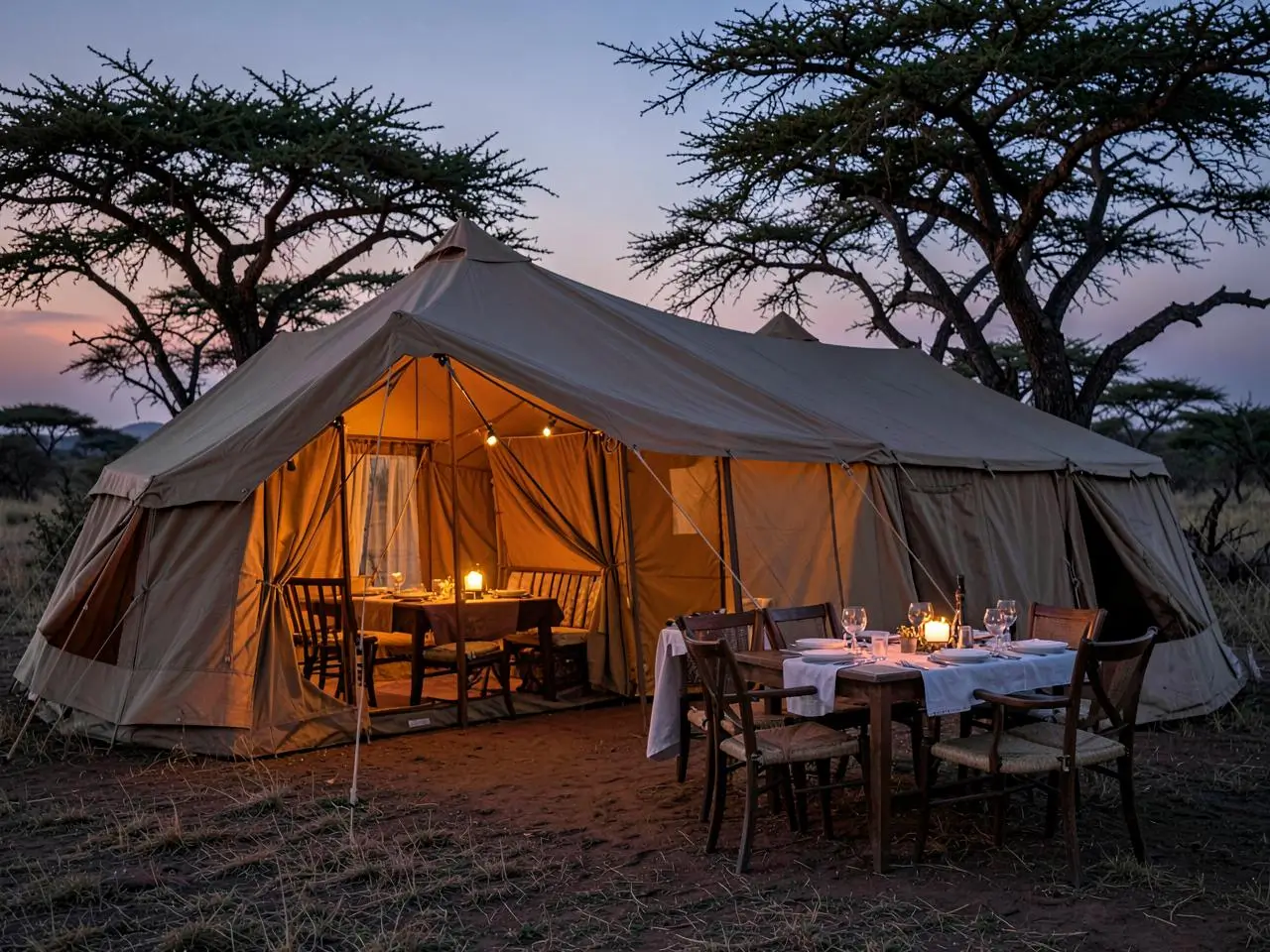
Tented camps, shared vehicles on some routes, the same wildlife access. You won’t see fewer animals — the parks are the same for everyone. View tours → - 5–7 Days: Family Safaris
Paced for children, with accommodation and activities designed for mixed-age groups. Works better than most people expect for kids aged 6 and up. View tours → - 7–11 Days: Honeymoon & Couples
Private itineraries combining bush safari with Zanzibar beach time. The contrast between the two is one of the best things about Tanzania as a destination. View tours →
Why Booking Locally Makes a Tangible Difference
There are three ways most travellers book a Tanzania safari. They go through a large international travel agent. They use a platform like Tripadvisor or SafariBookings. Or they book directly with a local operator based in Tanzania. All three can get you on a safari. They don’t all give you the same experience.
The difference is not primarily about price, though local operators are often more competitive on that too. It’s about the quality of the decision-making that happens on the day. When your guide lives in Arusha and has driven these roads for years, the decision about which route to take this morning — based on where lions were spotted yesterday, or where the migration herd moved overnight — is made by someone with current, local knowledge. That is not something an overseas booking agent can replicate.
Kilimora Adventure was founded by Franklin E. Moshi, who has over five years of hands-on experience as a tour guide and safari driver, and Diana T. Mungure, who brings more than a decade of project management experience at international standards. The guides are storytellers. They know the parks in the way that only comes from spending years inside them, not reading about them.
Booking locally also means more of your money stays in Tanzania — supporting the communities and conservation work that keeps these ecosystems worth visiting. That is not a marketing point. It is just how the economics work.
Practical Planning: What to Sort Before You Go
The logistics of a Tanzania safari are not complicated, but leaving things until the last minute creates problems. Here is what needs attention before your trip:
- Visa — Most nationalities need a tourist visa for Tanzania. Apply online via the official Tanzania e-visa portal before travel. Check the current requirements for your specific passport
- Yellow fever vaccination — Required for entry if you are arriving from a yellow fever endemic country. Strongly recommended regardless of origin
- Malaria prophylaxis — Tanzania is a malaria risk area. Speak to a travel health clinic about the right medication for your trip length and itinerary
- Travel insurance — Include medical evacuation cover. This matters considerably in remote park areas where the nearest major hospital may be hours away
- Packing — Neutral colours for game drives (no bright red or white), layers for early morning drives when temperatures drop, quality sunscreen, and a hat you won’t mind getting dusty. A full safari packing list is available on the Kilimora website
- Book early — Peak season tours (particularly July–October for Migration crossings) fill up months in advance. The earlier you confirm dates, the more options you have
Popular Safari Tours Tanzania: Where to Start
If you are not sure which tour to start with, these are the itineraries Kilimora guests book most often — and the types of travellers they suit best:
- 3-Day Serengeti and Ngorongoro Safari — The most efficient introduction to Tanzania’s two most famous destinations
- 4-Day Amazing Tanzania Wildlife Safari — Four parks, well-paced, suits travellers who want variety without rushing
- 6-Day Big Five Safari — Designed specifically around sighting all five in the Serengeti, Ngorongoro, Manyara, and Tarangire
- 7-Day Honeymoon Safari — Private itinerary, premium camps, built for couples who want something genuinely special
- 11-Day Tanzania and Zanzibar — The complete experience: bush safari followed by beach time on the island
Frequently Asked Questions
When is the best time to go on safari tours in Tanzania?
The dry season (June–October) offers the best overall game viewing — animals concentrate around water sources and the roads are in better condition. For the Great Migration river crossings, July–October in the northern Serengeti is the peak period. January–March is excellent for calving season at Ndutu. Tanzania has good wildlife year-round, so the right month depends on what you most want to see.
How many days should a Tanzania safari tour be?
Kilimora Adventure runs tours from 2 to 11 days. A minimum of 4 days covers two parks properly. Most travellers find 5–7 days gives a genuinely immersive experience across three parks without feeling rushed. Adding Zanzibar beach time extends the trip to 9–11 days — and the contrast between the two is one of the things that makes Tanzania such a good travel destination.
What is included in Kilimora Adventure’s safari tours?
All Kilimora safari tours include an experienced local guide and driver, a 4×4 safari vehicle, national park entry fees, accommodation (tented camp or lodge depending on the tour), meals as specified in the itinerary, and airport transfers from Arusha or Kilimanjaro International Airport. International flights and personal travel insurance are not included and should be arranged separately.
Can I see the Big Five on a Tanzania safari tour?
The Ngorongoro Crater gives the best single-day chance of seeing all five — lion, elephant, buffalo, leopard, and black rhino. The Serengeti is reliably excellent for lion, leopard, and elephant throughout the year. Kilimora’s dedicated Big Five safari is structured specifically around maximising these sightings.
Is it better to book a Tanzania safari tour locally or through an international agent?
Booking directly with a Tanzania-based operator like Kilimora Adventure means you deal with the people who actually run your trip — the guides who know the parks, make routing decisions on the day, and have real-time knowledge of wildlife movements. International agents add a layer between you and the actual experience, often at a higher price. The quality of the guide you end up with is the single biggest factor in how good your safari will be.
Ready to Book Your Safari Tours Tanzania?
Kilimora Adventure is based in Arusha and runs tours from 2 to 11 days across all of Tanzania’s major parks. Contact the team directly and we’ll match you to the right itinerary for your dates, group, and budget.
📞 +255 796 440 555 · +255 762 008 009 · info@kilimoratz.com