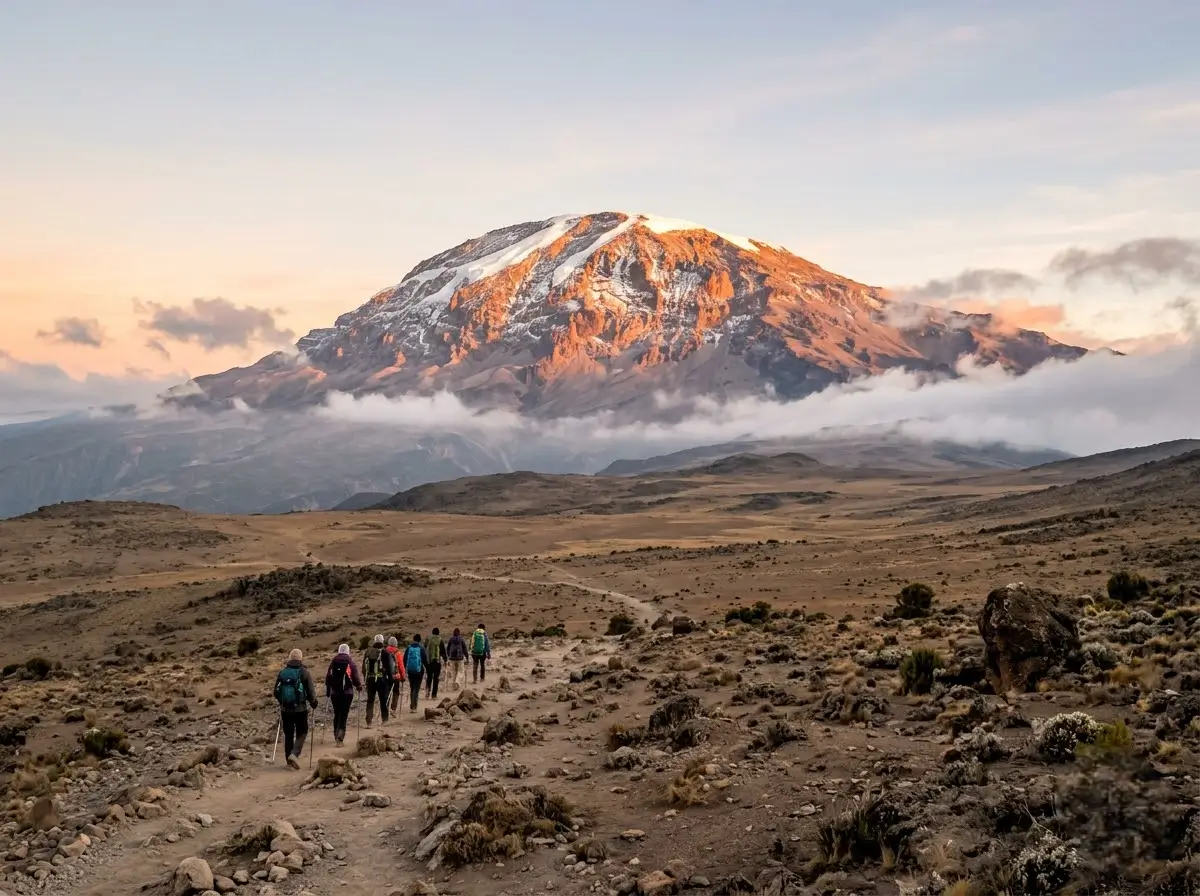
Most people planning to reach Uhuru Peak spend weeks on boots, jackets and training plans, and about ten minutes on the route. That’s backwards. When it comes to Climbing Mount Kilimanjaro, the route you pick decides how many days you’ll have to acclimatise, how crowded your campsites will be, what the scenery looks like and, honestly, how likely you are to stand on the summit at 5,895 metres.
There are seven main routes up the mountain. On paper they all end at the same place. In practice they feel like different trips. Here’s what each choice really means once you’re on the trail.
Altitude Is the Real Challenge, Not Fitness
Kilimanjaro doesn’t need ropes or technical skills. What stops people is altitude. Your body needs time to adjust to thinner air, and the only reliable fix is going slowly. Guides call it “pole pole”, Swahili for “slowly, slowly”, and you’ll hear it a hundred times a day.
This is where route choice comes in. Longer routes give you more days at altitude, and many follow a “climb high, sleep low” profile: you hike up to a higher point during the day, then drop back down to sleep. Your body gets the signal to adapt without being pushed too hard overnight. Shorter routes squeeze that adjustment into fewer days, and that’s when headaches, nausea and turned-back summit attempts become more common.
So a rough rule: every extra day you add is one of the cheapest ways to improve your summit odds.
The Main Kilimanjaro Routes, One by One
Marangu Route (5 to 6 days)
Marangu is the oldest route and the only one with hut accommodation instead of tents. People sometimes call it the “Coca-Cola route” because it was once seen as the easy option. It isn’t easy. The gradient is gentle, but the short itinerary leaves little time to acclimatise, and you go up and come down the same path, so the scenery repeats.
- Good for travellers who really don’t want to camp
- Sleeping in shared huts with bunk beds
- Choose the 6-day version if you go this way; the extra day helps a lot
Machame Route (6 to 7 days)
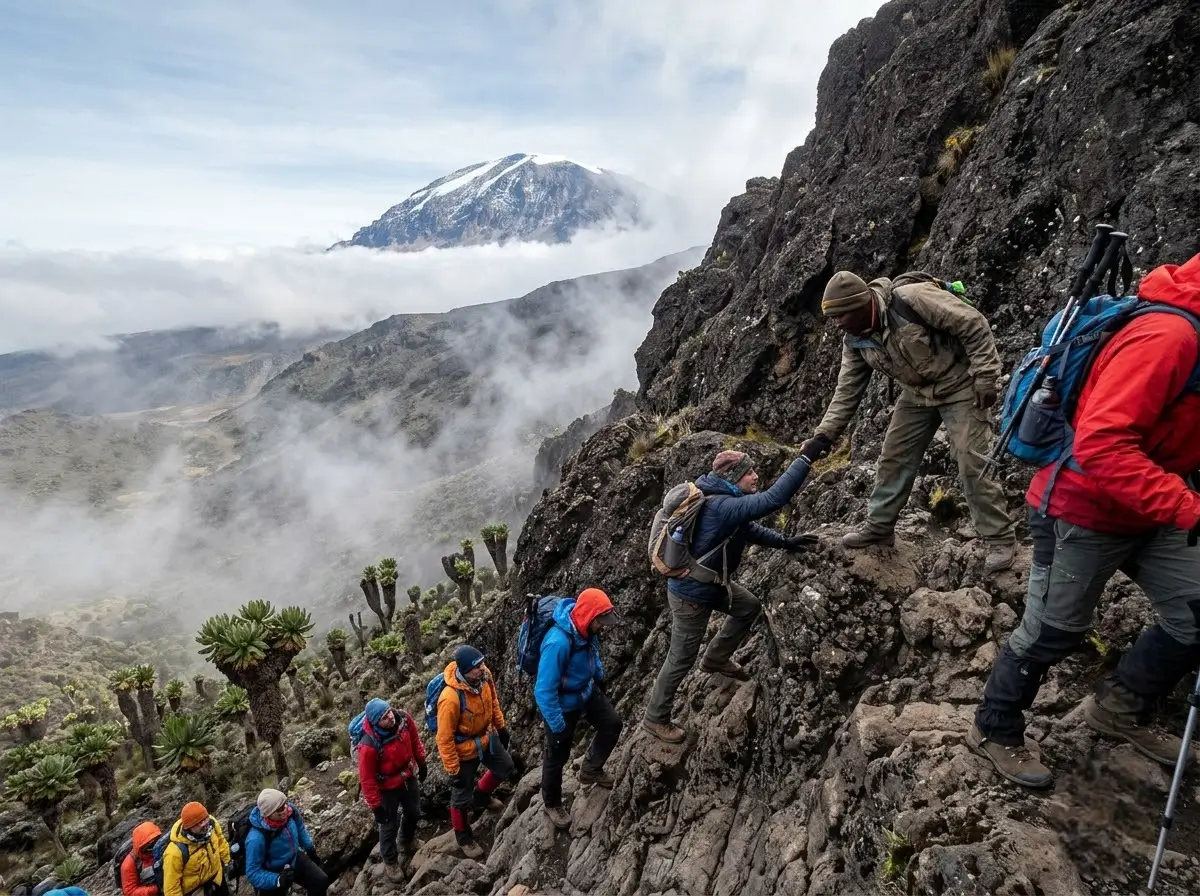
Machame is the most popular route on the mountain, and you can see why within the first two days. You start in rainforest, climb onto open moorland and then cross the Barranco Wall, a steep scramble that looks scary from below and turns out to be one of the most fun parts of the climb. The route has a natural climb-high, sleep-low pattern built in.
- Great scenery and good acclimatisation on the 7-day version
- Busy in peak season, so expect company at camp
- A solid pick for fit first-timers who are happy in tents
Lemosho Route (7 to 8 days)
If someone asks me for one route to recommend, Lemosho is usually it. It starts on the quieter western side, crosses the wide Shira Plateau and then joins the Machame trail near Lava Tower. The first few days feel remote. You’ll see fewer people and more of the mountain. Because it’s longer, acclimatisation is very good, which is why summit success on Lemosho tends to be strong.
- Quiet start, beautiful plateau views of Kibo
- Higher cost because of the extra park days
- Well suited to first-time climbers who want the best chance at the top
Rongai Route (6 to 7 days)
Rongai is the only route that approaches from the north, close to the Kenyan border. That side of the mountain gets less rain, so it’s a sensible option in the wetter months. The walking is steady rather than dramatic, and the campsites are calmer. You descend via Marangu, so you get to see two sides of Kilimanjaro.
Northern Circuit (9 days)
The Northern Circuit is the longest route and wraps around the quiet northern slopes before heading to the summit. Nine days sounds like a lot until you’re up there. The slow pace gives you the best acclimatisation of any route, and some nights you’ll feel like you have the mountain to yourself.
Umbwe Route (6 to 7 days)
Umbwe is short and steep. It climbs fast with little time to adjust, so it’s best left to experienced trekkers who have been at altitude before. Most first-timers should skip it.
Kilimanjaro Route Comparison at a Glance
| Route | Days | Difficulty | Acclimatisation | Crowds | Accommodation | Best For |
|---|---|---|---|---|---|---|
| Marangu | 5 to 6 | Moderate | Fair | Busy | Huts | People who prefer not to camp |
| Machame | 6 to 7 | Moderate to challenging | Good | Busy | Tents | Fit first-timers who want variety |
| Lemosho | 7 to 8 | Moderate | Very good | Quiet early on | Tents | Best all-round choice for most climbers |
| Rongai | 6 to 7 | Moderate | Good | Quiet | Tents | Rainy season climbs |
| Northern Circuit | 9 | Moderate | Excellent | Very quiet | Tents | Climbers who want the highest summit odds |
| Umbwe | 6 to 7 | Challenging | Poor | Very quiet | Tents | Experienced high-altitude trekkers |
How to Choose the Right Route for You
Forget which route sounds the most impressive. Ask yourself a few plain questions instead:
- How many days can you give it? If you can manage seven or eight days on the mountain, Lemosho or a 7-day Machame is hard to beat.
- Have you been to high altitude before? If not, avoid the shortest itineraries. Give your body time.
- When are you travelling? In the rainy months, Rongai’s drier northern side is a smart call.
- Do you mind crowds? Machame and Marangu are busy. Lemosho, Rongai and the Northern Circuit feel calmer.
- Tents or huts? Only Marangu has huts. Every other route is camping, with porters setting up for you.
If you’re stuck between two routes, pick the longer one. We’ve rarely heard a climber say they wished they’d spent one less day acclimatising.
What Doesn’t Change, Whatever Route You Pick
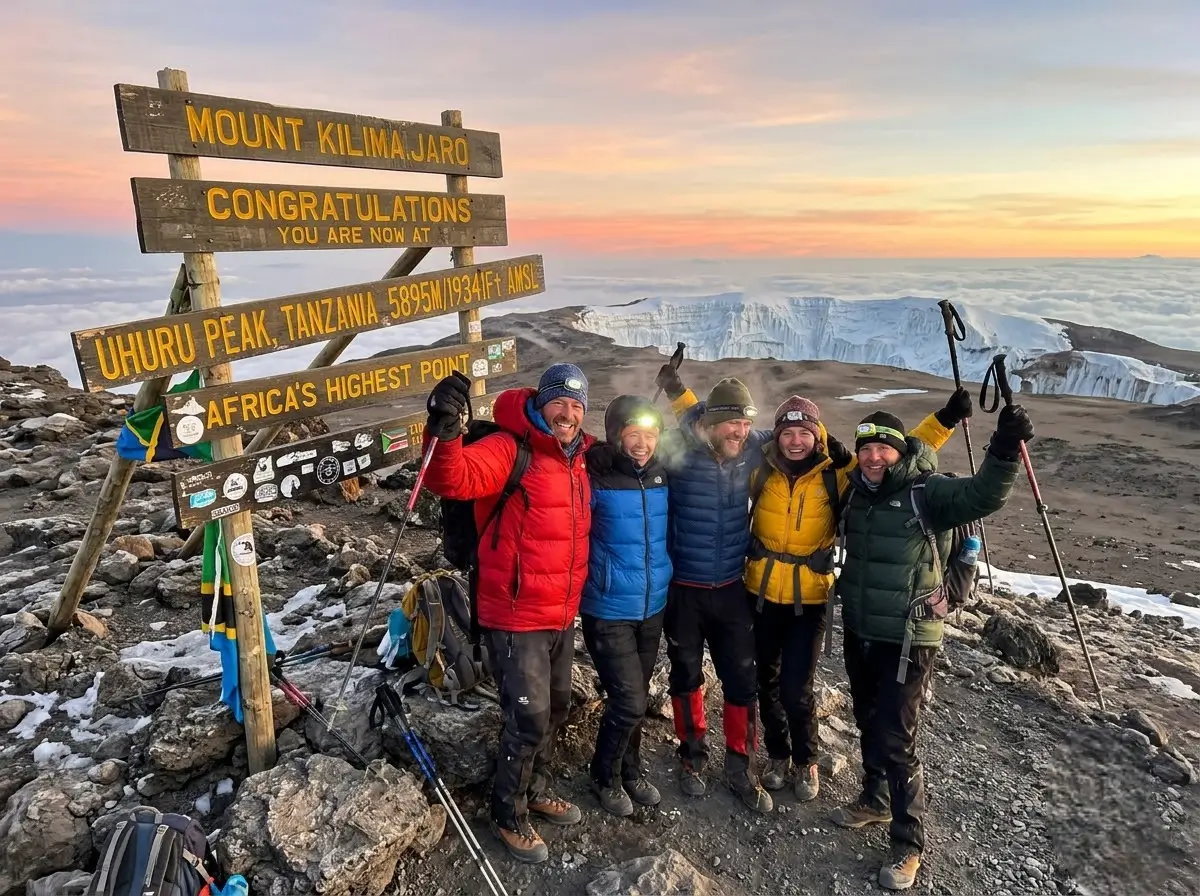
Some things are the same on every route. Summit night starts around midnight, it’s cold (often well below freezing), and you’ll walk for six to eight hours in the dark by headlamp before reaching the crater rim at dawn. It’s the hardest part of the whole climb. It’s also the part people talk about for years afterwards.
The best time to climb is during the dry seasons, roughly January to early March and June to October. You’ll also need a licensed operator and guide, since independent climbing isn’t allowed in Kilimanjaro National Park. A good crew of guides, porters and a cook makes a huge difference, both to your safety and to how much you actually enjoy the days on the trail.
Kilimora Adventure runs guided climbs on the main routes, including a 7-day Lemosho route itinerary that many of our first-time climbers choose. Our team is based in Tanzania, and our guides know the mountain season by season.
Ready to Start Climbing Mount Kilimanjaro?
Tell us how many days you have, when you want to travel and how you feel about altitude. We’ll help you pick the route that fits, and plan the rest around it.