Most people planning a Tanzania trip hit the same fork in the road. Do you go where everyone goes, or do you go somewhere wilder and harder to reach? That is really what the Selous Game Reserve vs Serengeti question comes down to. Both are huge, both are full of animals, and both will give you stories you’ll be telling for years. They just feel very different once you’re out there.
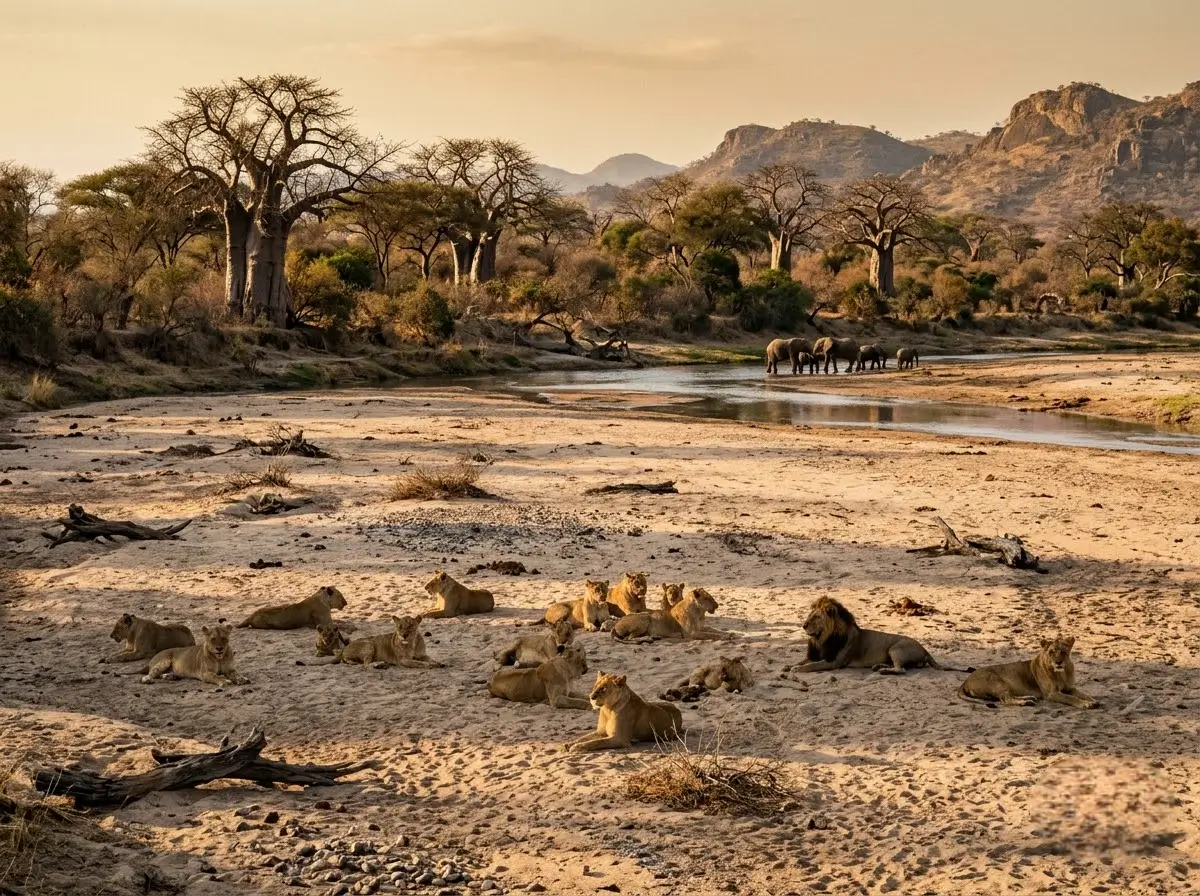
The Serengeti is the famous one. Open plains, the Great Migration, lions lounging on rock outcrops. Selous, in the south, is river country: boat safaris, walking safaris, wild dogs, and long stretches of road where you won’t see another vehicle. Neither park is “better.” The right pick depends on how you like to travel, how much time you have, and what you want to see.
A Quick Note on Names: Selous and Nyerere National Park
If you’ve been reading up on Selous, you’ve probably seen the name Nyerere National Park too. In 2019, Tanzania turned the northern section of the old Selous Game Reserve, the part where nearly all photographic safaris happen, into Nyerere National Park. The southern section is still called Selous Game Reserve. Most travellers and safari operators still say “Selous” for the whole area, so we’ll do the same here. Just know that when you book, your lodge will most likely be inside Nyerere National Park.
The Serengeti: Big Skies and the Great Migration
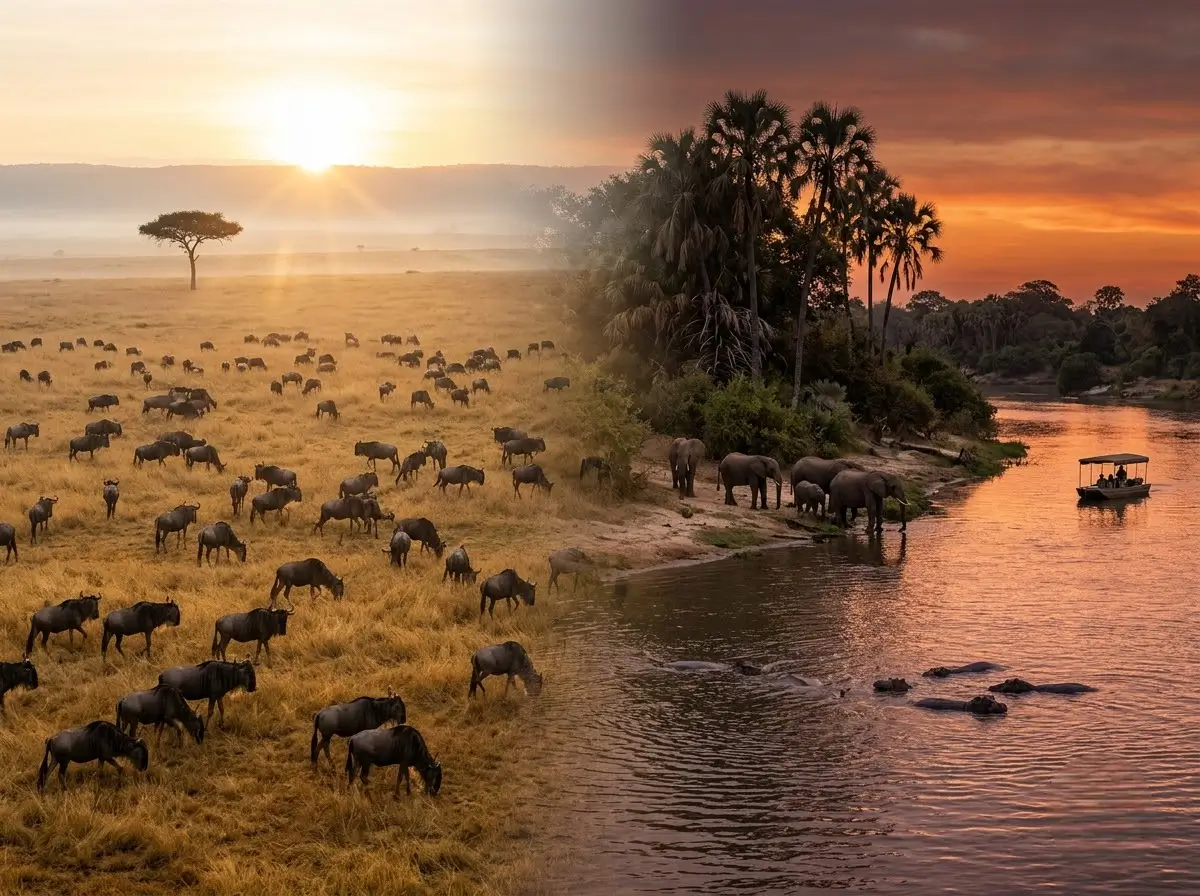
The Serengeti covers about 14,750 square kilometres of grassland, woodland and kopjes in northern Tanzania. It is the park most people picture when they think of an African safari, and honestly, it earns that reputation. Game drives here are about scale. You can stop on a rise and see zebra and wildebeest spread out to the horizon.
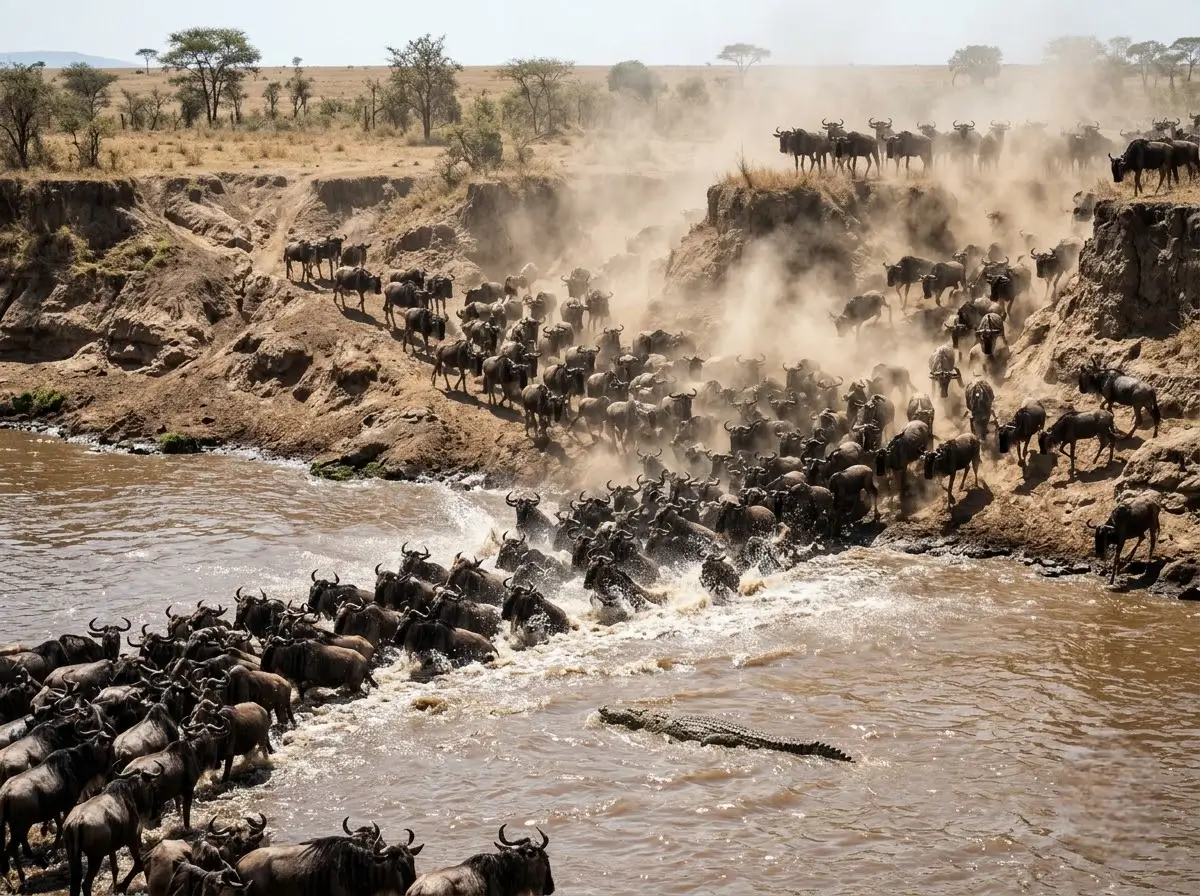
The big draw is the Great Migration. Around 1.5 million wildebeest, plus hundreds of thousands of zebra and gazelle, move in a loop through the Serengeti and into Kenya’s Maasai Mara each year. Where they are depends on the month:
- December to March: the herds are in the southern Serengeti and Ndutu area for calving season. Predator action is intense.
- April to June: the herds move through the central and western Serengeti, heading for the Grumeti River.
- July to October: the northern Serengeti and the Mara River crossings. This is the dramatic footage you’ve seen on TV.
Outside of the migration, the central Seronera area has resident lions, leopards and cheetahs all year. Our Serengeti safari guide breaks down the regions in more detail if you want to pick a specific area.
The trade-off is company. In peak months, a leopard sighting in Seronera can draw ten or fifteen vehicles. Good guides know how to avoid the worst of it, but you won’t have the Serengeti to yourself.
Selous: Rivers, Wild Dogs and Real Solitude
Selous is massive. The old reserve covered roughly 50,000 square kilometres, and Nyerere National Park alone is around 30,000 square kilometres, about twice the size of the Serengeti. Yet it gets a small fraction of the visitors. On many game drives, the only other vehicle you’ll see belongs to your own camp.
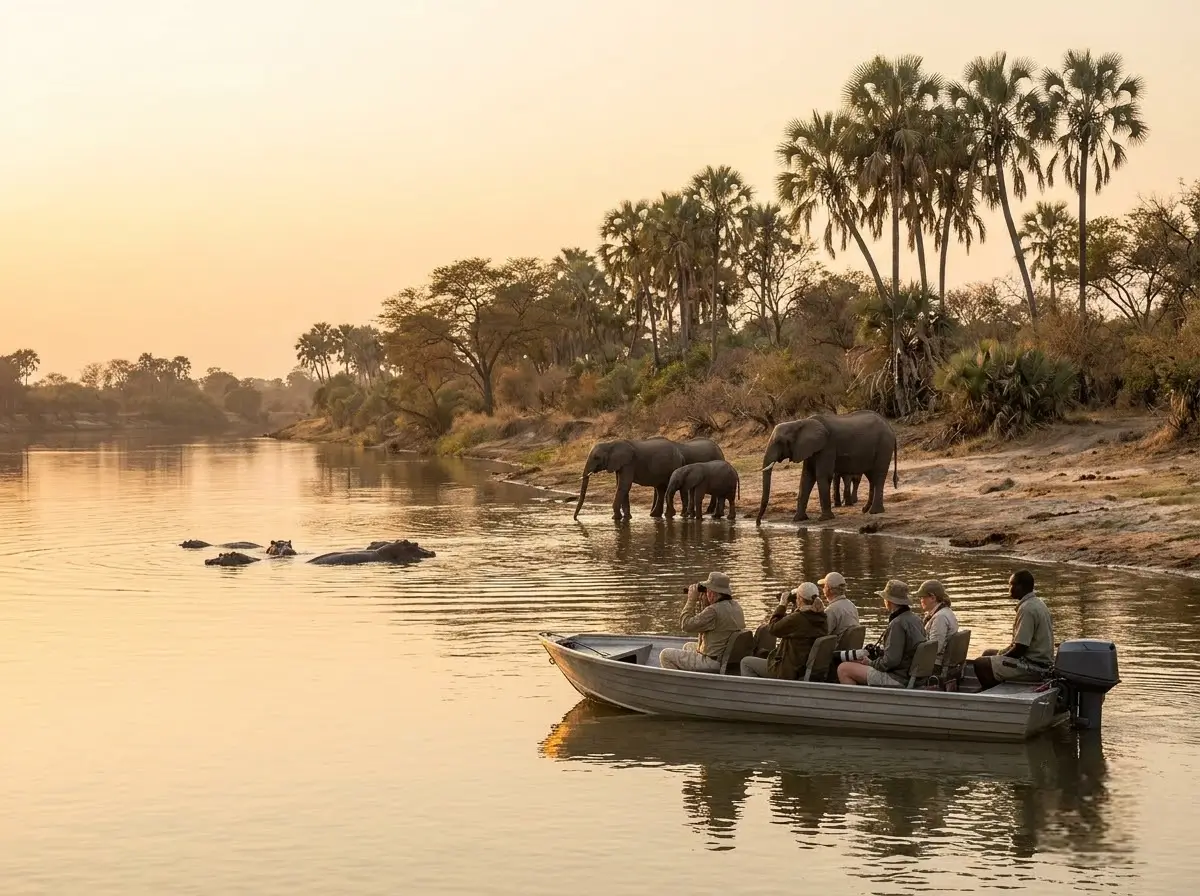
The Rufiji River runs through the middle of it, feeding a chain of lakes and channels. That water shapes the whole experience. Hippos and crocodiles are everywhere, elephants come down to drink in the afternoons, and the birdlife is fantastic.
What really sets Selous apart is what you can do here that you can’t in the Serengeti:
- Boat safaris: drifting along the Rufiji or Lake Manze, you get eye level with hippos, crocs and drinking elephants. It’s quiet and close in a way a vehicle can’t match.
- Walking safaris: with an armed ranger, you head out on foot to read tracks and learn the smaller stuff, like dung beetles and medicinal plants.
- Fly camping: some camps offer a night out in the bush under a simple mosquito net tent.
- African wild dogs: Selous holds one of the largest wild dog populations left in Africa. Sightings are never guaranteed, but your odds are good here.
The downside? Game density is lower than the Serengeti, and the bush is thicker, so you’ll work a bit harder for your sightings. Some people love that. Others find it frustrating on a short trip.
Selous Game Reserve vs Serengeti: Side-by-Side Comparison
Here’s how the two parks stack up on the things most travellers ask us about:
| Feature | Serengeti | Selous (Nyerere NP) |
|---|---|---|
| Location | Northern Tanzania, near Arusha | Southern Tanzania, inland from Dar es Salaam |
| Size | About 14,750 sq km | About 30,000 sq km (Nyerere NP) |
| Landscape | Open grass plains, kopjes, acacia woodland | Rivers, lakes, miombo woodland, palm groves |
| Signature sight | The Great Migration and big cats | Wild dogs, hippos, elephants along the Rufiji |
| Activities | Game drives, hot air balloon safaris | Game drives, boat safaris, walking safaris, fly camping |
| Crowds | Busy in peak season, especially Seronera | Very quiet, few vehicles |
| Best time to visit | All year (follow the migration) | June to October; many camps close April to May |
| Getting there | Drive from Arusha or fly to an airstrip | Short flight from Dar es Salaam or Zanzibar |
| Best for | First-timers, photographers, migration chasers | Repeat visitors, adventurers, beach add-ons |
Which Park Suits Your Travel Style?
Pick the Serengeti if…
- It’s your first safari and you want the classic experience with lots of animals in plain view.
- You’ve dreamed of seeing the migration or a river crossing.
- Big cats are high on your list. The Serengeti’s lion and cheetah sightings are hard to beat.
- You want to combine it with Ngorongoro Crater and Tarangire on a northern circuit trip.
- You’re travelling with kids or older family members who’ll enjoy steady action from the vehicle.
Pick Selous if…
- You’ve done a safari before and want something less polished and more remote.
- The idea of a boat or walking safari excites you more than another game drive.
- You hate the thought of sharing a sighting with a dozen other vehicles.
- You’re heading to Zanzibar anyway. Selous is a short flight away, so it pairs really well with beach time.
- You’re keen on wild dogs, birds, and river life.
Can You Do Both?
Yes, and plenty of people do. A common route is to start in the north with the Serengeti and Ngorongoro, fly south to Selous for a few days on the river, and finish on the beach in Zanzibar. You get the big open plains and the famous wildlife first, then the quiet, water-based side of Tanzania after.
If you’re short on time, though, I’d say pick one. Splitting five days between the two parks means a lot of hours spent in transit. With 10 days or more, combining them makes a lot more sense.
Practical Tips Before You Book
- Check the season: Selous gets heavy rain from March to May, and many camps shut down. The Serengeti stays open all year.
- Budget for flights: getting to Selous almost always means a light aircraft flight. Luggage limits are usually around 15 kg in soft bags.
- Plan for malaria: both parks are in malaria zones, but Selous is lower, hotter and more humid. Talk to your doctor about prevention.
- Pack for walking: if you’re doing a walking safari in Selous, bring neutral-coloured clothes and closed shoes.
- Give yourself time: three nights is the minimum we’d suggest for either park. Four or more is better.
Final Thoughts
The Serengeti gives you the Africa you’ve seen in documentaries, and it does that brilliantly. Selous gives you something rawer: hippos grunting next to your boat, fresh lion tracks on your morning walk, and hours without another person in sight. If you’re still torn, think about the moment you’re most looking forward to. Is it a herd of wildebeest charging into the Mara River, or a silent drift down the Rufiji at sunset? Your answer usually tells you which park to choose.
Still Deciding Between Selous and Serengeti?
Our team in Arusha knows both parks inside out. Tell us how many days you have, when you’re travelling and what you most want to see, and we’ll build a safari that fits your style, whether that’s the migration in the north, river safaris in the south, or a bit of both.