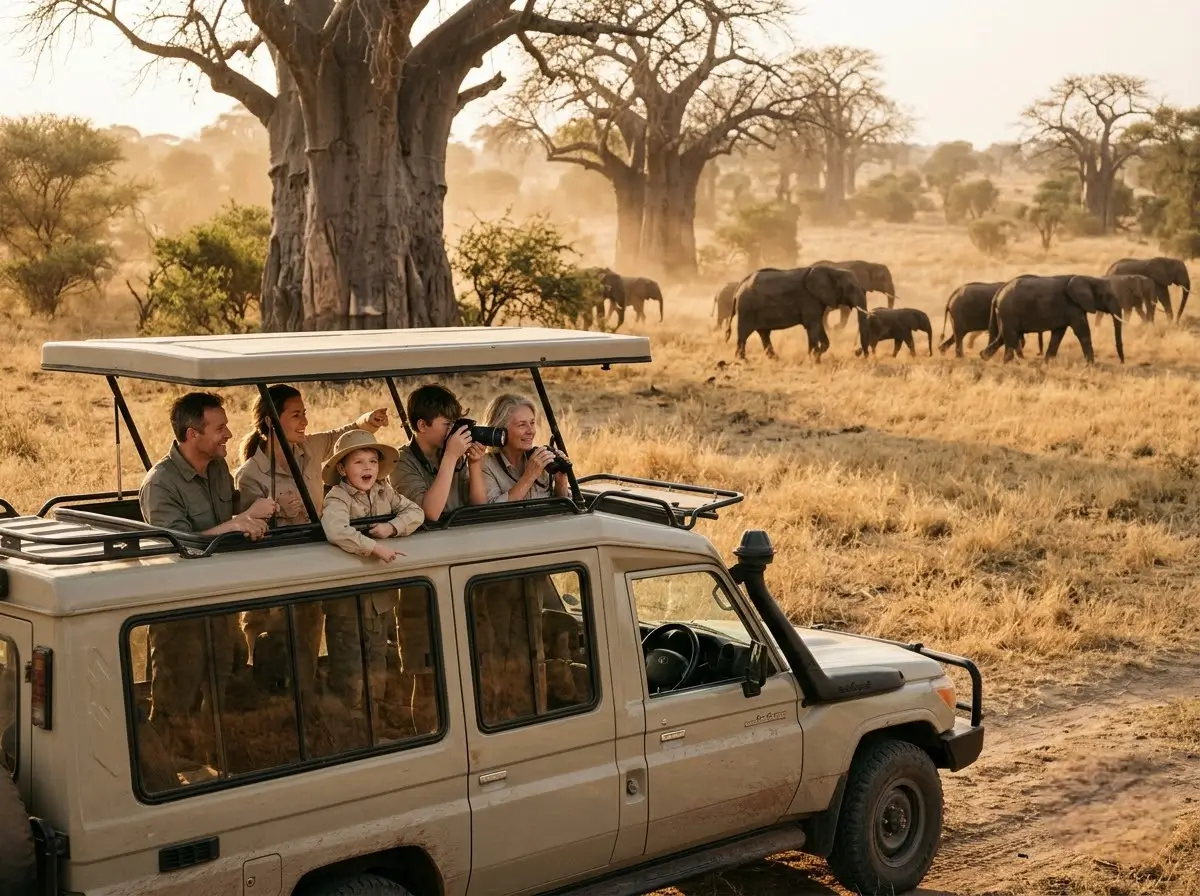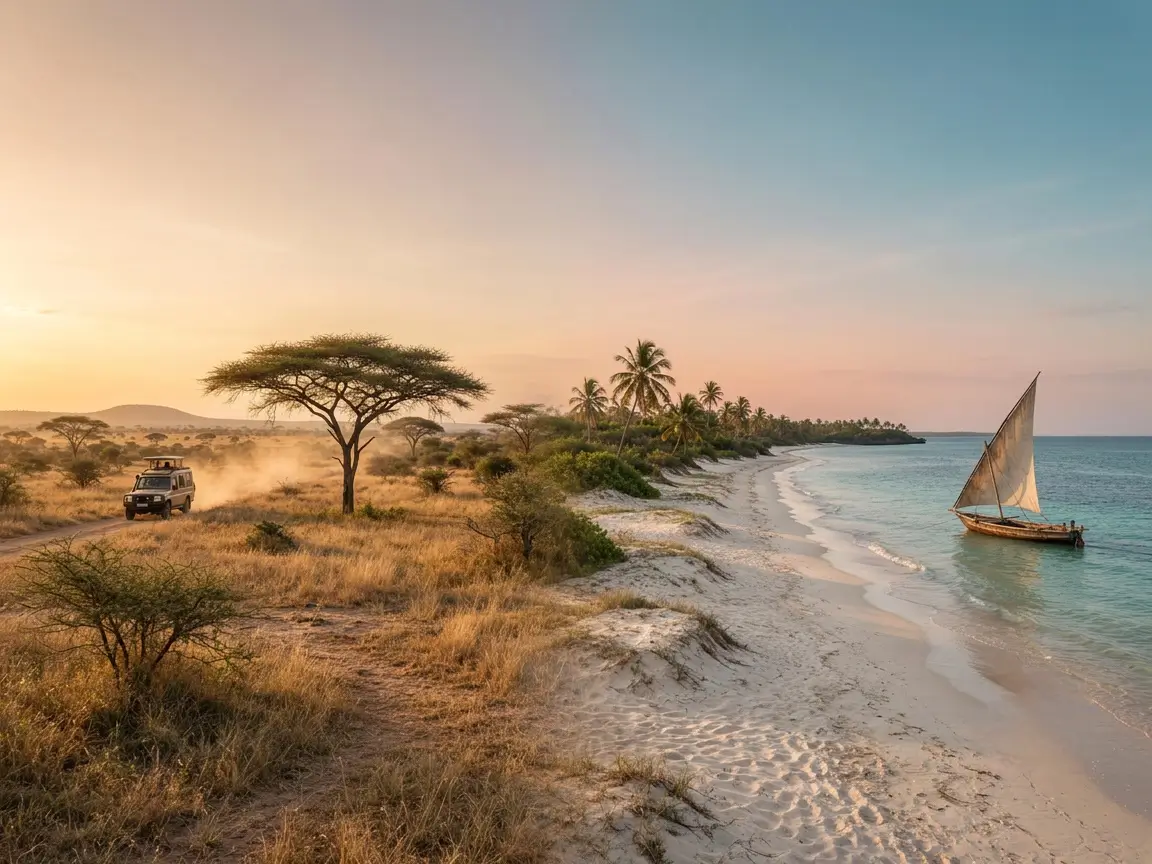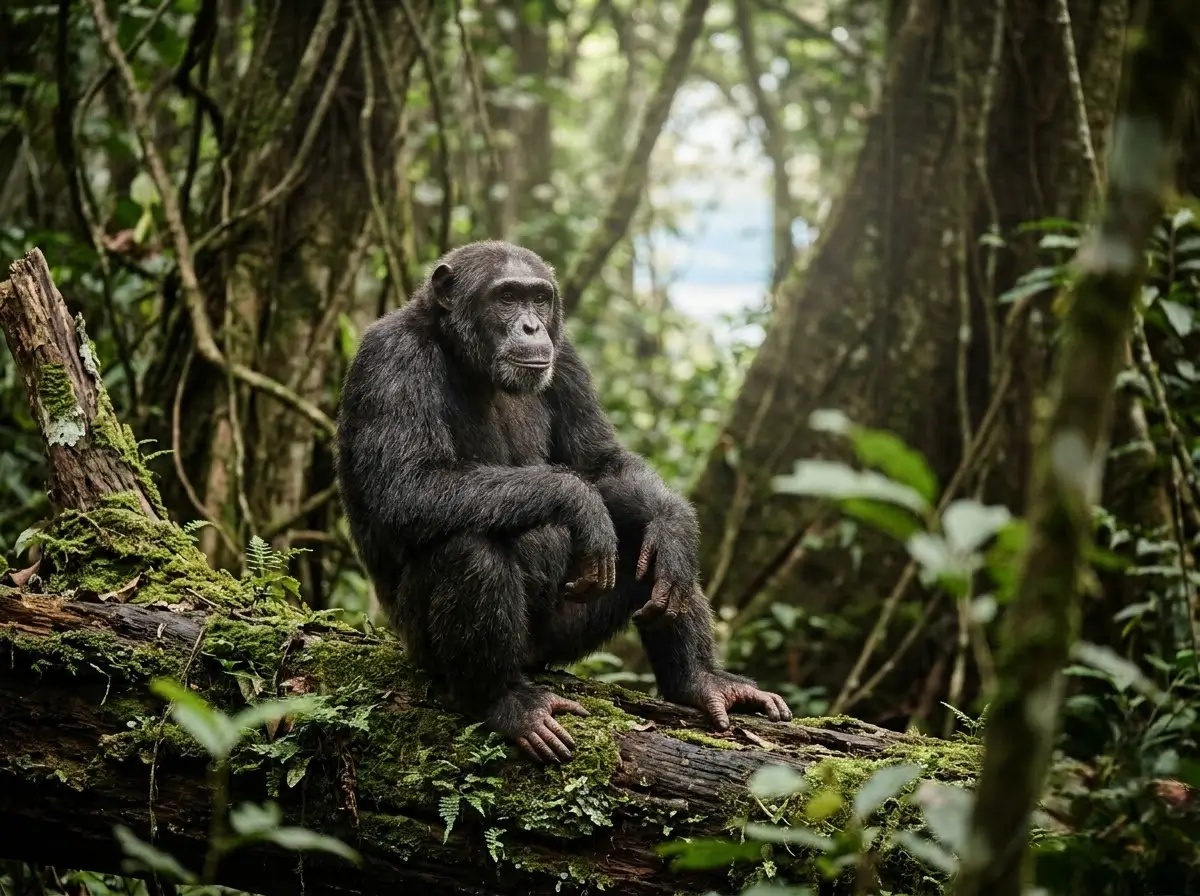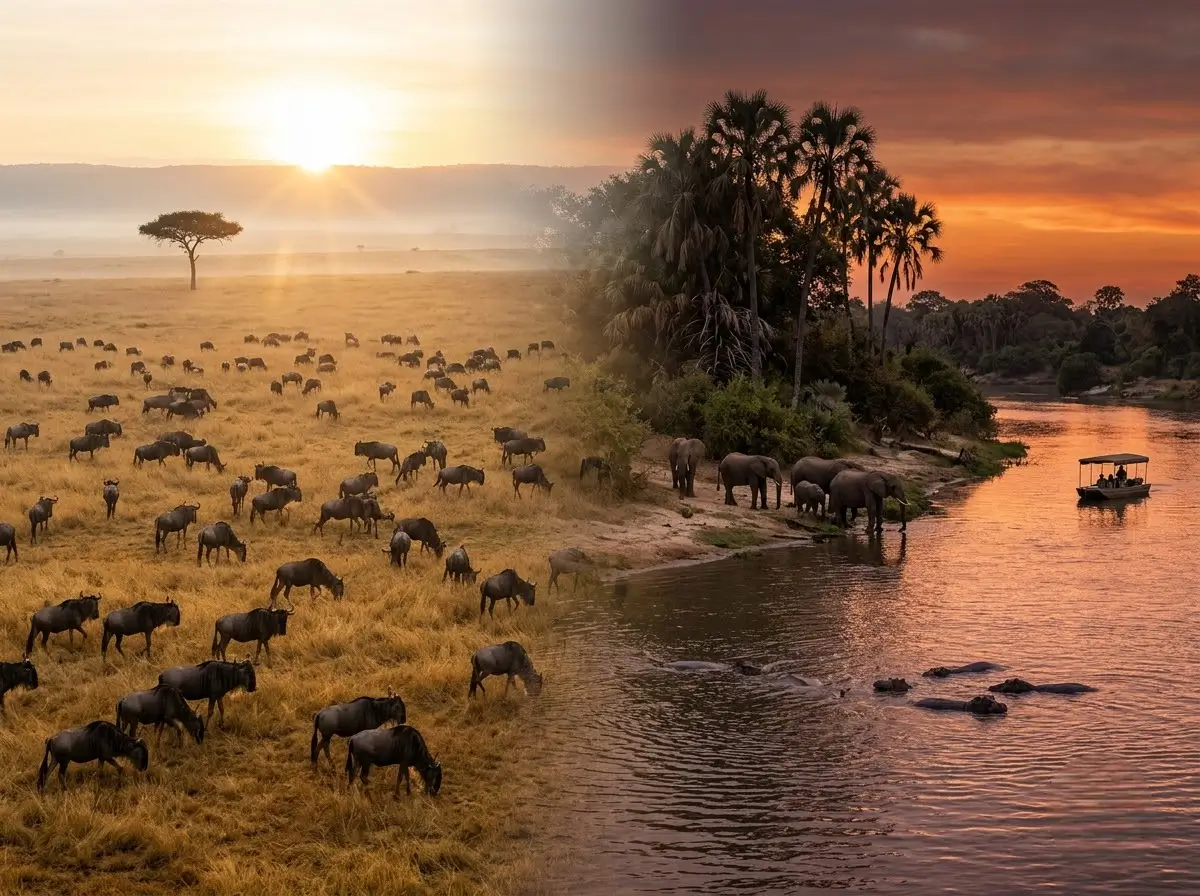
A Family Safari Tanzania trip often has a five-year-old who can’t sit still, a teenager who would rather be on their phone, two tired parents and a grandparent with a bad knee all in one vehicle. Fitting all of them into one trip is the hard part. The animals are easy, because northern Tanzania has plenty of them. What makes or breaks the trip is the planning: drive times, rest days, the right lodge, and a guide who knows when to turn the engine off and let a seven-year-old watch elephants for twenty minutes.
This guide covers what works at each age, which parks suit families best, and the small decisions that keep everyone happy for a week in the bush.
Start With the Youngest and the Oldest Person in the Group
Most families plan a safari around what they want to see. It works better the other way round. Look at the youngest child and the oldest adult, work out what each of them can comfortably manage, and build the trip from there.
A toddler can manage two or three hours in a vehicle before things fall apart. A grandparent may be fine with long drives but find the bumpy crater road hard on the back. Once you know those limits, choosing parks and lodges gets much simpler.
What Works at Each Age
Under 6
Young children can do a safari, but keep the days short. Plan morning drives of three to four hours, then a long lunch back at the lodge with a pool. Many tented camps in remote areas have minimum age rules, often 6 or older, so check before you fall in love with a particular camp. Lodges with fenced grounds and family rooms make life a lot easier.
Ages 6 to 12
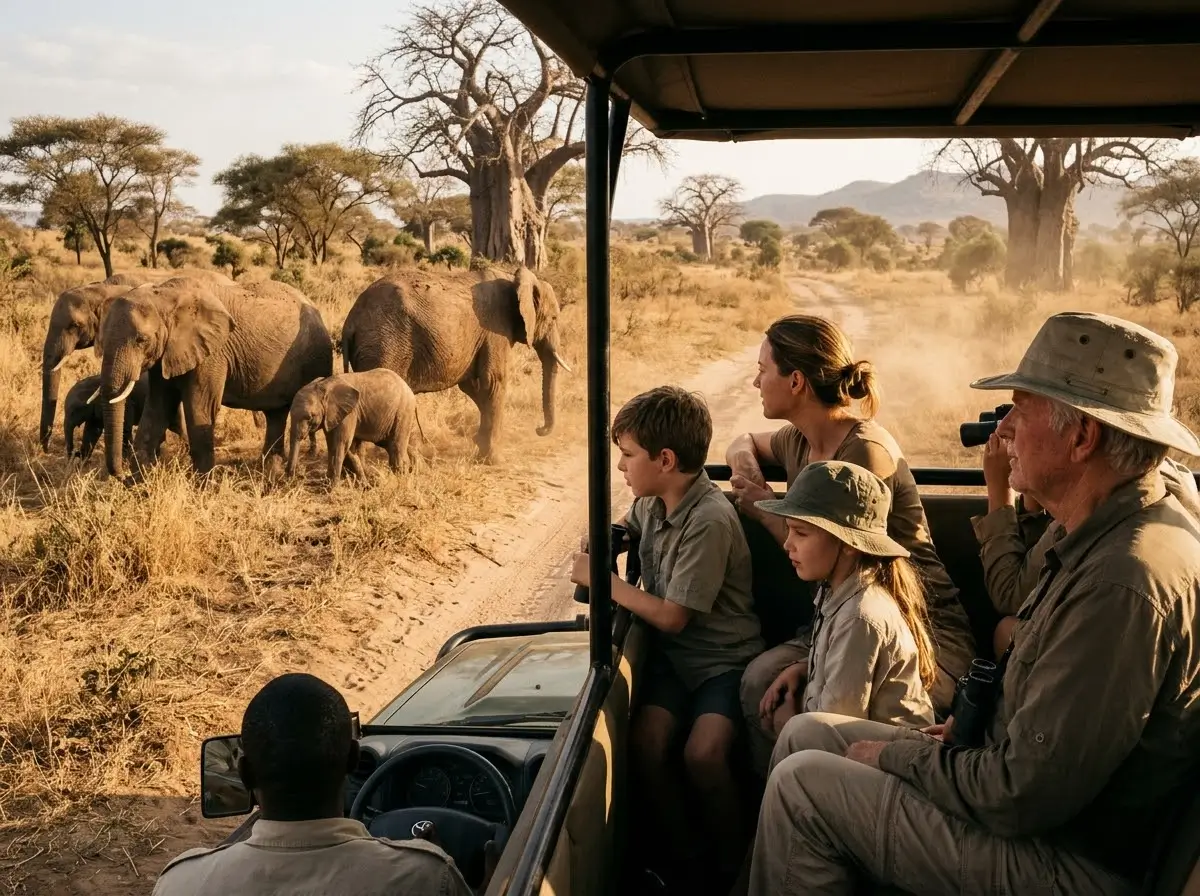
This is probably the best age for a first safari. Kids this age are old enough to sit through a game drive and young enough to be completely amazed by a lion yawning ten metres away. Give them a pair of binoculars and a wildlife checklist and they will run the spotting for the whole vehicle. Some lodges run junior ranger programmes too, with tracking lessons and short guided walks.
Teenagers
Teens get bored when they’re stuck in the back seat with nothing to do. Hand them the camera. Photography gives them a job, and a decent zoom lens on a cheetah at sunrise can win over even a sulky 15-year-old. Older teens can usually join walking safaris (most operators set the minimum at 12 to 16), and that is often the part of the trip they talk about afterwards.
Grandparents and Less Mobile Travellers
A safari suits older travellers well, since most of the time is spent sitting in a vehicle. The things to watch are rough roads and steps. Ask for rooms close to the main lodge, choose a vehicle with easy access, and think about flying between Arusha and the Serengeti rather than driving eight hours each way.
Which Parks Suit Which Family
Not every park fits every group. Here is a quick comparison of the northern circuit parks most families visit from Arusha.
| Park | Approx. Drive from Arusha | Best For | Family Notes |
|---|---|---|---|
| Arusha National Park | Under 1 hour | Giraffes, zebras, colobus monkeys | Good half-day warm-up for small kids, short drive, no long sitting |
| Tarangire | About 2 to 2.5 hours | Big elephant herds, baobab trees | Quieter than other parks, easy first stop, great for all ages |
| Lake Manyara | About 2 hours | Baboons, flamingos, birdlife | Compact park, short game drives work well for under 6s |
| Ngorongoro Crater | About 3 to 4 hours | Big Five in a single day | Steep descent road, but animals are close and plentiful, so kids stay engaged |
| Serengeti | 7 to 8 hours by road, about 1 hour by air | Great Migration, big cats | Fly in with young kids or grandparents, drive with older children who handle long days |
Pace the Days So Nobody Burns Out
The biggest mistake families make is cramming in too many parks. Staying two nights in each place, rather than one, makes a huge difference. You unpack once, the kids settle in, and you aren’t spending every morning loading bags.
- Keep driving days under four hours where you can, and break long transfers with a stop at a village or viewpoint.
- Do the main game drive early, when animals are active and kids are fresh.
- Build in a midday rest. Pool time is not wasted time on a family trip.
- Book a private vehicle so you can stop for toilet breaks or head back early without upsetting other guests.
- Add a slow day halfway through with no drives at all. Everyone will thank you for it.
Choosing Where to Stay
Families do best in lodges that have family rooms or connecting tents, a pool, and staff used to kids. Fenced lodges are worth it with very young children, because unfenced camps can have animals walking through at night. That is part of the magic for adults, but it’s stressful with a curious four-year-old.
For a shorter trip, a ready-made route like the Kilimora Big Five Adventure (4 days, 3 nights) covers the key parks without long days on the road, so it suits families with younger children or grandparents.
Health, Paperwork and Park Fees
See a travel clinic six to eight weeks before you fly. They’ll advise on malaria tablets suited to each person’s age and on routine vaccinations. Bring proof of yellow fever vaccination if you are coming from or through a country where it’s required. Every traveller, including babies, needs a passport valid for at least six months and enough blank pages.
Children usually pay lower national park fees than adults, and very young children often enter free, which helps the budget. Your operator will confirm current rates when they quote the trip.
Packing That Actually Helps
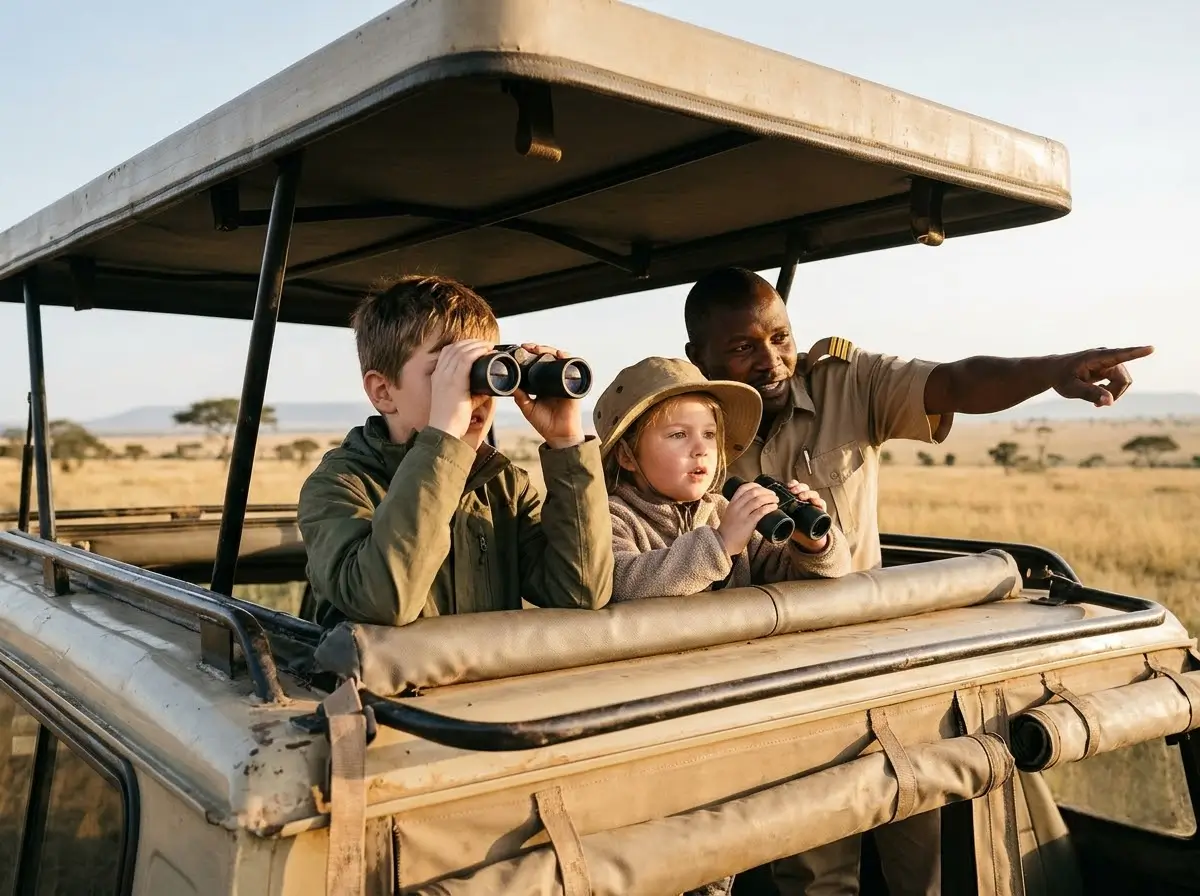
- A pair of binoculars for each child, so no one has to share.
- Layers. Mornings in Ngorongoro can be cold, and afternoons on the plains get hot.
- Neutral clothes in khaki, beige or olive. Avoid dark blue and black, which attract tsetse flies.
- Snacks, wet wipes, and a small bag of games or books for transfers.
- Child-safe sunscreen, insect repellent and wide-brim hats.
- Soft bags rather than hard suitcases, especially if you are taking light aircraft.
When to Go With Kids
June to October is the dry season, and it lines up with summer school holidays in many countries. Animals gather near water, the grass is short and sightings come easily, so it’s a good choice if this is the family’s first safari. December to February is another strong option, with green landscapes, baby animals in the southern Serengeti and fewer crowds. April and May bring the heaviest rains, and some roads and camps get tricky, so most families skip those months.
Plan Your Family Safari Tanzania Trip With Kilimora
Every family is different. Our Arusha team can plan a route around your kids’ ages, your parents’ comfort and the time you have, with private vehicles, family-friendly lodges and guides who are patient with endless “is that a lion?” questions.