Packing for a safari is a strange puzzle. You’re heading somewhere hot, yet you’ll be pulling on a fleece at 6am on the Ngorongoro Crater rim. You want to bring everything, but the small bush plane to the Serengeti only takes around 15kg in a soft bag. This Tanzania Safari Packing List clears up the confusion item by item, based on what our guides in Arusha see travellers bring every season (and what they wish they’d brought).
The same mistakes come up again and again. Crisp white shirts turned orange by the red dust before lunch. Hard suitcases that won’t fit in the vehicle. No warm layer for the first game drive of the day. None of these ruin a trip. They just make it less comfortable than it needs to be.
Two Rules to Follow Before You Pack Anything
- Soft bags only. Light aircraft on fly-in safaris usually cap luggage at about 15kg, including hand luggage, and it has to be a soft duffel with no wheels or rigid frame. Even on drive-in trips, a soft bag slides into a Land Cruiser far more easily than a suitcase.
- Neutral colours win. Khaki, olive, tan and soft greys hide dust and don’t draw attention from wildlife. That is honestly the whole dress code.
Clothing: What Actually Works on Game Drives
Daytime temperatures often sit between 25 and 30°C in the dry season, but early mornings and evenings are cool, especially at altitude. The Ngorongoro Crater rim is over 2,200 metres high and can feel properly cold at dawn. Layers solve both problems at once.
Colours to Choose and Colours to Avoid
- Choose: khaki, beige, olive, brown and muted green.
- Avoid dark blue and black: both attract tsetse flies, which you’ll find in parts of Tarangire and the western Serengeti. The bite hurts more than it harms, but you won’t enjoy it.
- Avoid bright white: the dust will stain it within hours.
- Leave camouflage at home: civilians aren’t permitted to wear camouflage print in Tanzania, as it’s reserved for the military.
Your Clothing Checklist
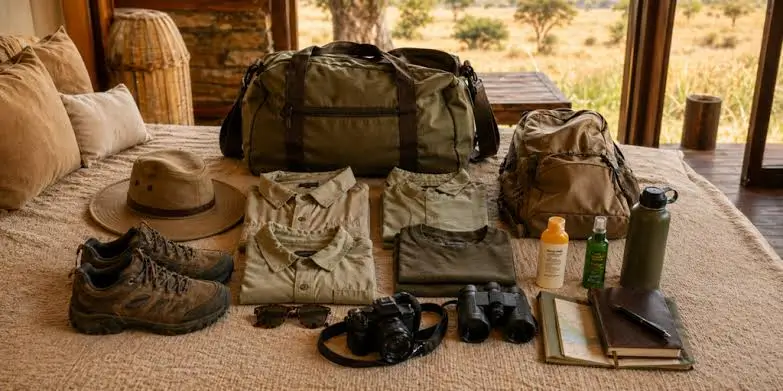
- 3 to 4 lightweight long-sleeved shirts for sun and mosquito protection
- 2 to 3 T-shirts or vests for warm afternoons
- 2 pairs of lightweight trousers and one pair of shorts
- A fleece or warm jumper for early drives
- A light waterproof jacket (essential between November and May)
- A wide-brimmed hat, plus a buff or scarf to keep dust out of your face
- Something comfortable and clean for dinner at the lodge. Nobody dresses up, but fresh clothes feel wonderful after a dusty day
- Swimwear if your lodge has a pool or you’re adding a beach stay
- Sleepwear, plus underwear and socks for 4 to 5 days
Footwear: Keep It Simple
You’ll spend most of each day sitting in the vehicle, so heavy hiking boots are overkill for a standard safari. Here’s what you need:
- Comfortable closed trainers or light walking shoes
- Sandals or flip-flops for the lodge and camp showers
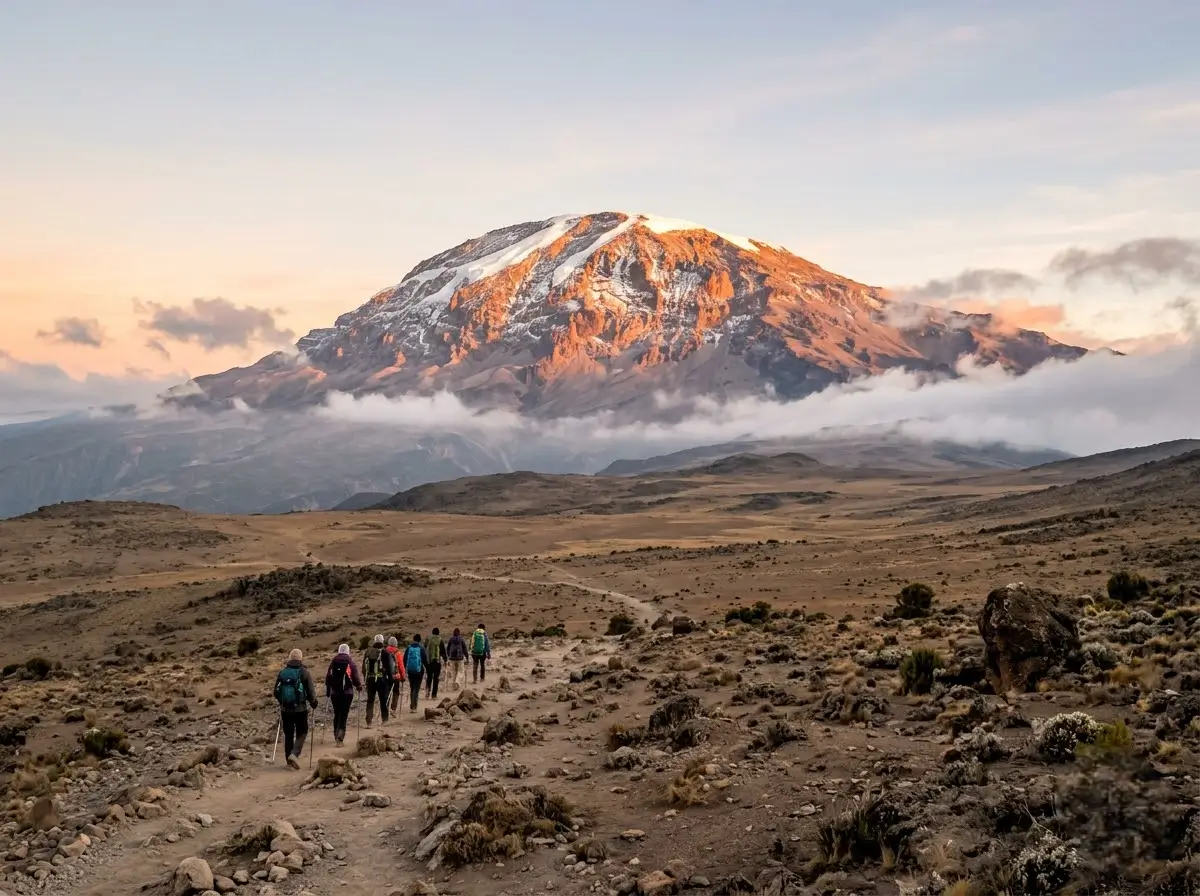
- Proper broken-in boots, but only if a walking safari or a Kilimanjaro trek is part of the plan
Health, Toiletries and the Small Things That Matter
Pharmacies in Arusha are decent, but once you’re inside the parks you’re hours from the nearest shop. Pack these before you leave home:
- Insect repellent containing DEET (30 to 50%) or picaridin
- SPF 50 sunscreen and a lip balm with SPF
- Antimalarial tablets prescribed by your GP or a travel clinic
- Rehydration sachets and anti-diarrhoea tablets
- Prescription medication in its original packaging, with a copy of the prescription
- Hand sanitiser and wet wipes, because the dust gets absolutely everywhere
- A basic first aid kit: plasters, antiseptic cream, painkillers and antihistamines
- Eye drops. Wind and dust dry your eyes out fast, and contact lens wearers feel it most
For vaccinations and entry rules, check the UK government’s Tanzania travel advice a few weeks before you fly.
Documents and Money
- A passport valid for at least six months, with two blank pages
- A Tanzania e-visa, applied for online through the official Tanzania immigration portal before you fly
- A yellow fever certificate if you’re arriving from, or transiting through, a risk country
- Travel insurance that includes medical evacuation cover
- US dollars in clean, newer notes. Torn bills and notes printed before 2009 are often refused
- Small denominations for tipping guides and camp staff
- Printed and digital copies of everything, stored separately
Still choosing your route? Our guide to safari tours in Tanzania walks through the parks, seasons and tour formats in more detail.
Camera, Binoculars and Tech
This is where people either overpack badly or forget the one thing they really needed. These are worth the space:
- Binoculars. Non-negotiable. A pair of 8x42s is a great all-rounder. Without them, a leopard in a sausage tree is just a spotty smudge
- A camera with a zoom lens (100 to 400mm is ideal) or a phone with good optical zoom
- Spare batteries and at least two memory cards
- A small beanbag to rest your lens on the vehicle roof or window
- A power bank. Many vehicles have charging points, but don’t count on them
- A plug adaptor. Tanzania uses Type D and Type G sockets, so UK plugs usually fit
- A head torch for walking around camp after dark
- A small daypack to keep your camera, sunscreen, water and a layer within reach during game drives
If photography is the main reason you’re going, a photographic safari gives you more time at sightings and more room to shoot.
Dry Season vs Green Season: How Your Bag Changes
The core list stays the same all year. A handful of items shift depending on when you travel:
| Item | Dry Season (June to October) | Green Season (November to May) |
|---|---|---|
| Waterproof jacket | Optional, rarely needed | Essential, afternoon showers are common |
| Warm layers | Essential for chilly mornings | Useful, though mornings are milder |
| Insect repellent | Needed, fewer mosquitoes | Essential, mosquitoes are more active |
| Dust protection | Buff and eye drops are a must | Less needed, mud replaces dust |
| Footwear | Trainers are fine | Quick-drying shoes work better |
| Sun protection | Essential | Essential, cloud doesn’t block UV |
| Best for | River crossings and big game | Calving season, birdlife, fewer crowds |
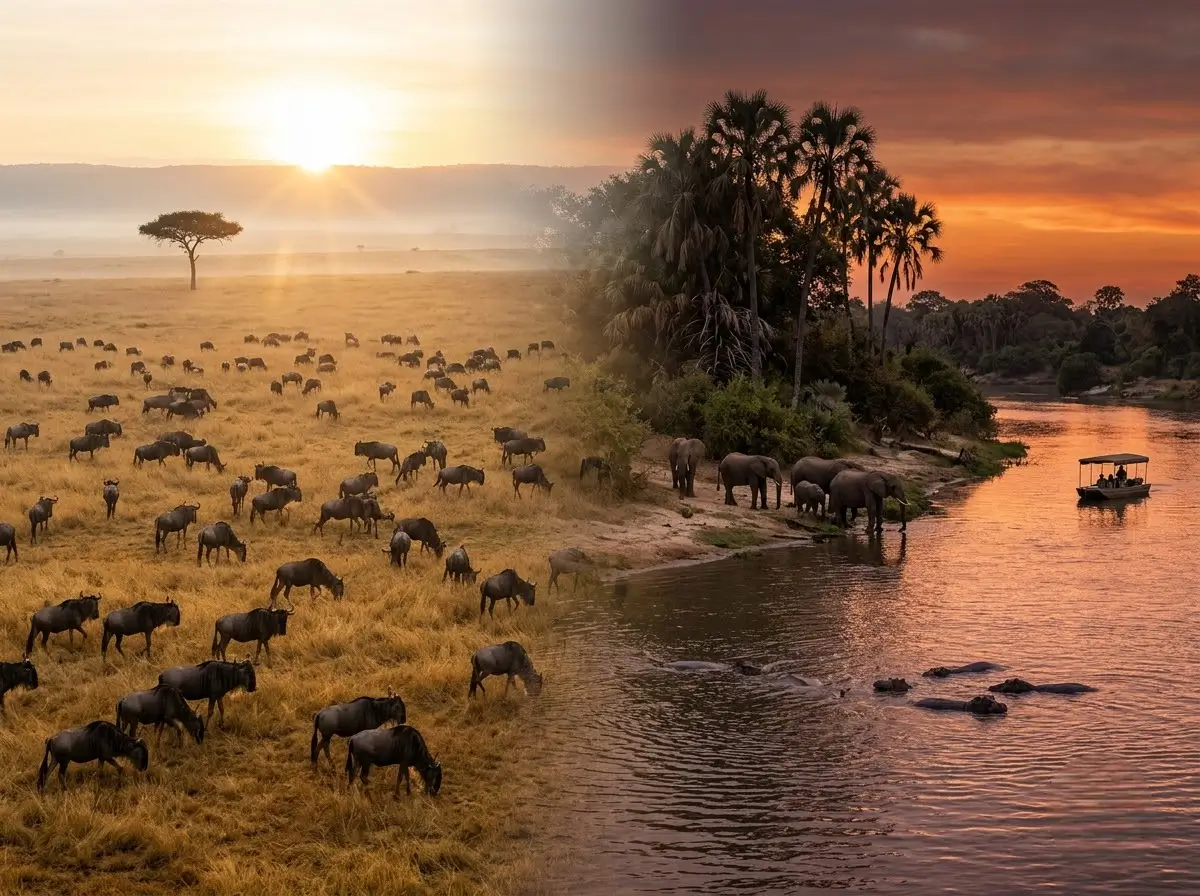
Timing your trip around the herds? The Great Migration experience page shows which months suit each phase.
What to Leave at Home
- Plastic carrier bags. Tanzania banned them in 2019 and they can be taken off you at the airport. Packing cubes or cloth bags do the job better anyway
- Hard-shell suitcases. They won’t go on light aircraft and they’re awkward in the vehicle
- Camouflage clothing. Covered above, but worth repeating
- Drones. Flying one in a national park needs permits that are very hard to get
- Expensive jewellery. You won’t miss it out here
- Too many outfits. Laundry exists. Trust us on this one
Extra Packing Tips for Different Travellers
Families with Children
Kids get restless on long transfers. Pack a pair of children’s binoculars, favourite snacks, a downloaded film or two and child-friendly sunscreen. A simple animal checklist turns every game drive into a game. Our family safaris are paced with younger travellers in mind.
Couples and Honeymooners
If you’re finishing with a Zanzibar beach stay, add reef-safe sunscreen, beachwear and a light cover-up. In Stone Town, keep shoulders and knees covered out of respect for local customs. Planning something special? Take a look at our honeymoon and couples safaris.
Budget and Camping Safaris
On a camping safari, bring a sleeping bag liner, a quick-dry towel and earplugs. Hyenas can be surprisingly noisy neighbours. A head torch moves from “useful” to “essential” here. Our budget-friendly tours cover the same parks and the same wildlife.
Frequently Asked Questions
How much luggage can I bring on a Tanzania safari?
Drive-in safaris are more flexible, but fly-in trips usually allow about 15kg per person in soft bags. One soft duffel and a small daypack is plenty for most people.
Do I need smart clothes for dinner at safari lodges?
No. Smart-casual is the most you’ll ever need, and plenty of guests eat in what they wore on the afternoon drive.
Can I buy forgotten items in Arusha?
Basics such as sunscreen, toiletries and snacks are easy to find in Arusha. Specialist kit like good binoculars or camera gear is much harder, so bring those from home.
Packed and Ready? Let’s Plan Your Safari
Kilimora Adventure is based in Usa River, Arusha, and runs safaris from 2 to 11 days across Tanzania’s best parks. Tell us your dates, group and budget, and we’ll match you with the right itinerary and answer any packing questions before you fly.
+255 796 440 555 · +255 762 008 009 · info@kilimoratz.com