Good gear helps, and good technique helps more. But the biggest factor in wildlife photography is simply being in the right place at the right time. Tanzania has some of the finest settings on the planet: river crossings, crater floors, baobab forests and soda lakes turned pink by flamingos. This guide covers the Best Wildlife Photography Locations in Tanzania, what each one is best for, when to go and what to pack for it. It’s based on years of our guides in Arusha positioning vehicles for photographers, and learning which spots deliver and which ones mostly look good on a brochure.
Each location has a personality. Some are about drama, some about light, some about intimate behaviour. Knowing which is which helps you plan a route that fits the photos you want.
Serengeti National Park
The Serengeti is big enough to be several photography destinations in one. Where you go inside it matters as much as when.
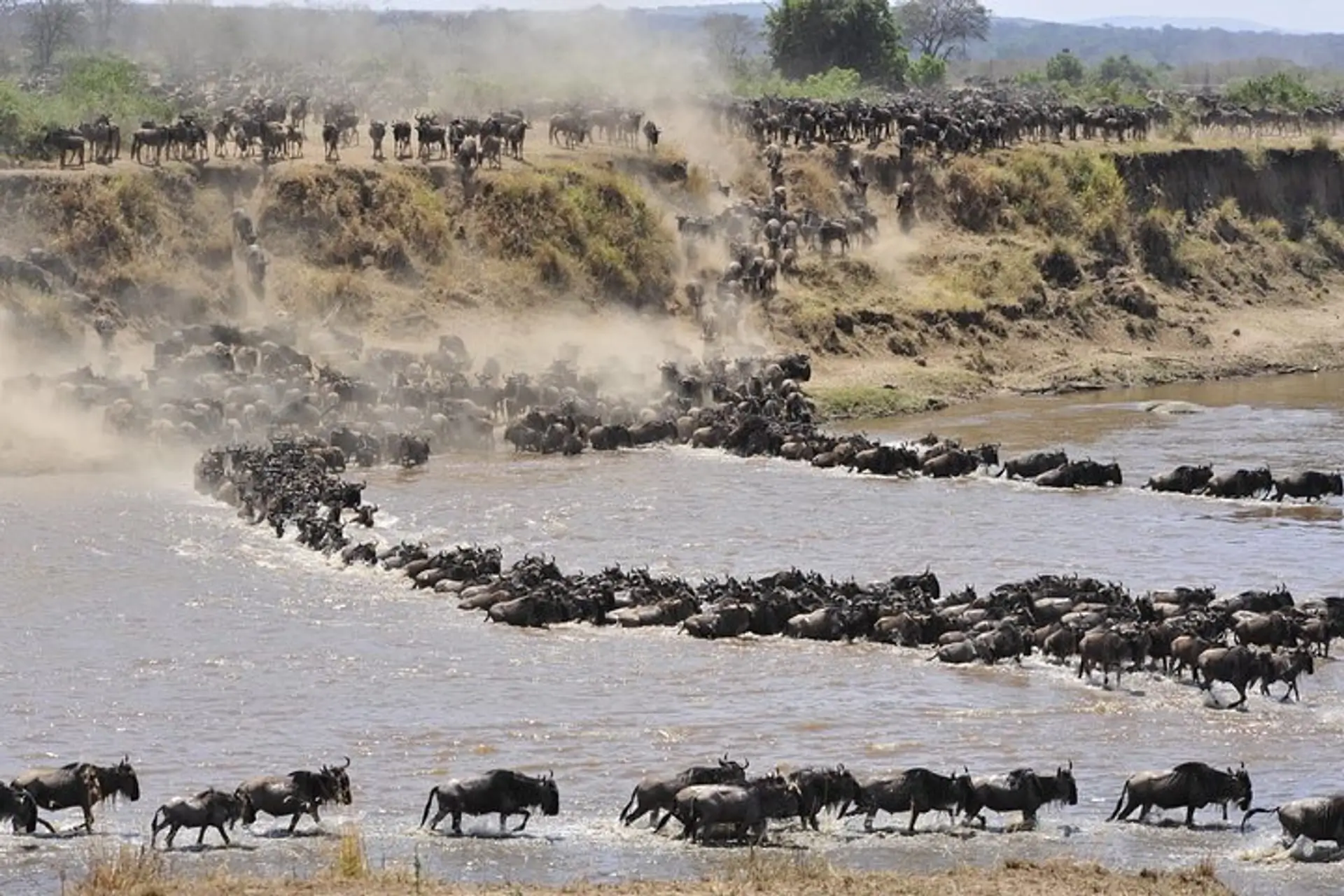
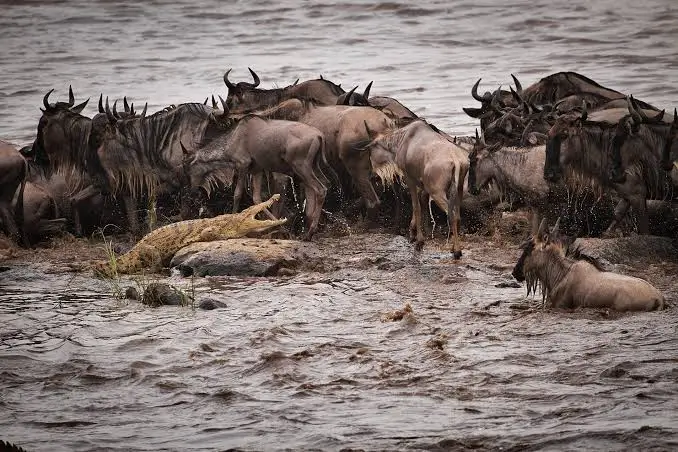
Mara River, Northern Serengeti
- The shot: wildebeest leaping into the river, crocodiles waiting below, dust and spray everywhere.
- When: roughly July to October.
- Tip: crossings can take hours to start. Bring patience, snacks and a long lens, and be ready to switch to a wider lens when the herd gets close.
Ndutu, Southern Serengeti
- The shot: newborn wildebeest calves, cheetahs hunting on short grass and dramatic storm skies.
- When: January to March, during calving season.
- Tip: off-road driving is permitted in parts of the Ndutu area, which can mean better angles. Your guide will know the current rules.
Seronera, Central Serengeti
- The shot: leopards in sausage trees, lions on kopjes (rocky outcrops) and big skies.
- When: year-round, with resident big cats.
- Tip: it gets busy, so head out at first light before other vehicles arrive.
The Great Migration experience page shows where the herds are each month, which is useful when planning a photography trip around them.
Ngorongoro Crater
The Ngorongoro Crater is the most reliable place in Tanzania to photograph a wide range of animals in one morning. The crater walls also make a stunning backdrop.
- Best subjects: black rhino, lions, hyenas, flamingos on Lake Magadi, and golden-crowned cranes.
- Light: the descent opens at dawn. Early mist rising off the crater floor creates moody, atmospheric images.
- Tip: rhinos are often distant, so bring your longest lens. A wider lens helps you include the crater walls for a sense of place.

Tarangire National Park
Tarangire is a photographer’s favourite in the dry season, and it’s often less crowded than the Serengeti.
- Best subjects: large elephant herds, giant baobab trees, pythons in trees and lions resting in the shade.
- When: June to October, when animals gather along the Tarangire River.
- Tip: elephants walking beneath baobabs at golden hour make a classic shot. Use a mid-range zoom to keep both in frame.
Lake Manyara National Park
Compact and green, Lake Manyara offers something different from the open plains.
- Best subjects: flamingos and pelicans on the lake, baboon troops, blue monkeys and occasionally tree-climbing lions.
- Light: the forest is shady, so raise your ISO. On the lakeshore, morning light gives soft reflections.
- Tip: fast shutter speeds for birds taking off, and try a slow pan for motion blur.
Lake Natron
Remote, hot and otherworldly, Lake Natron is for photographers who want something nobody else at home has.
- Best subjects: lesser flamingos (it’s their main breeding site in East Africa), red-tinted salt flats and Ol Doinyo Lengai, an active volcano.
- When: flamingo numbers usually peak from roughly August to December.
- Tip: aerial views show the lake’s colours best, but even from the ground, early morning gives soft light and calm water for reflections.
Mount Kilimanjaro and Arusha National Park
Not every great wildlife photo is in the classic savannah.
- Mount Kilimanjaro: elephants or giraffes with Africa’s highest peak in the background are among the most iconic images in East Africa. Clear views are most likely at dawn.
- Arusha National Park: black-and-white colobus monkeys in the forest, flamingos on the Momella Lakes and Mount Meru views. A good warm-up day near Arusha.
Photography Locations Compared
| Location | Signature Shot | Best Months | Lens to Prioritise |
|---|---|---|---|
| Mara River (Serengeti) | Migration river crossings | July to October | 100 to 400mm, plus wide |
| Ndutu (Serengeti) | Calves, cheetahs, storms | January to March | 150 to 600mm |
| Ngorongoro Crater | Black rhino, crater landscapes | Year-round | Long telephoto and wide |
| Tarangire | Elephants under baobabs | June to October | 70 to 200mm |
| Lake Manyara | Flamingos, primates | November to June | 100 to 400mm |
| Lake Natron | Flamingos, volcano, salt flats | August to December | Wide and long telephoto |
Southern Tanzania: For Photographers Who Want Space
If you’ve already done the northern circuit, or you simply want fewer vehicles in your frame, the south is worth a look.
- Mikumi National Park: accessible from Dar es Salaam, with open floodplains, giraffes, elephants and lions, often with very few other vehicles.
- Ruaha and Nyerere (Selous): wild, remote parks known for large lion prides, wild dogs and boat safaris, which give a unique low angle on hippos and crocodiles.

Beyond Animals: Landscape and People Locations
Some of the best frames from a Tanzania trip have no animals in them at all. Leave room in your schedule, and memory cards, for these:
- Ngorongoro Crater rim at sunrise: clouds pouring over the rim and light spreading across the crater floor. Shoot from your lodge deck before the morning game drive.
- Serengeti kopjes: granite outcrops such as the Moru and Simba Kopjes make strong foregrounds against open plains, especially under storm clouds.
- Night skies anywhere remote: with almost no light pollution, the Milky Way over an acacia tree is very achievable with a wide lens and something steady to rest on.
- Maasai communities near Ngorongoro: portraits and daily life, always with permission and ideally on a community-run visit.
- Stone Town and Zanzibar beaches: carved doors, busy markets and dhows at sunset make a colourful change of style. Our Zanzibar beach experiences pair well with a photography safari.
Mixing these into your edit tells a much fuller story of the trip than a gallery of animal close-ups alone. It’s also a good way to use the harsh midday hours, when wildlife tends to rest in the shade and the light is too strong for flattering animal portraits.
Planning a Route Around Your Shot List
You can’t be everywhere in one trip, so build your route around the photos that matter most to you.
- Migration crossings: July to October in the northern Serengeti, plus Ngorongoro on the way back.
- Predator action: January to March at Ndutu, combined with the crater.
- Elephants and landscapes: Tarangire in the dry season, plus the Serengeti.
- Birds and flamingos: Lake Manyara, Lake Natron and Arusha National Park.
A route that gives you two or three nights in each key area beats a rushed circuit every time. Our 8-day Best of Tanzania safari covers the main northern locations at a pace that suits photographers.
Practical Tips for Each Location
- Use a private vehicle. Your own space, window and timings make a huge difference. Our luxury and exclusive safaris include private vehicles.
- Stay inside the parks. Camps inside the parks let you be at the best spots at sunrise.
- Protect your gear. Dust in the dry season and rain in the green season are both hard on cameras. Bring covers and cleaning kit.
- Follow the rules. Drones need special permits in national parks, and off-road driving is restricted in most areas. Check the latest regulations on the Tanzania National Parks website.
- Talk to your guide. Share your shot list on day one. A good guide will plan around light and animal behaviour, not just sightings.
For more on parks, seasons and tour styles, see our guide to safari tours in Tanzania.
Frequently Asked Questions
What is the single best wildlife photography location in Tanzania?
For variety, the Serengeti. For guaranteed diversity in one morning, the Ngorongoro Crater. Most photographers choose to visit both.
When is the best time for wildlife photography in Tanzania?
June to October offers clear visibility and concentrated wildlife. January to March gives dramatic skies, green landscapes and calving season action.
Can beginners visit these locations too?
Absolutely. Every location here is reachable on a standard safari, and a good guide will help you get great shots whatever your camera.
Plan Your Photography Safari
Kilimora Adventure is based in Usa River, Arusha, and runs safaris from 2 to 11 days across Tanzania’s best parks. Share your shot list and travel dates, and we’ll plan a route around the right locations, the best light and a guide who understands photographers.
+255 796 440 555 · +255 762 008 009 · info@kilimoratz.com